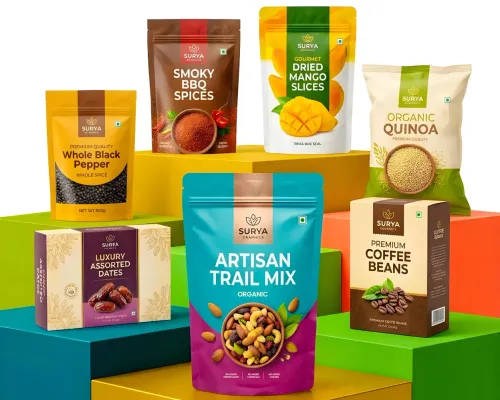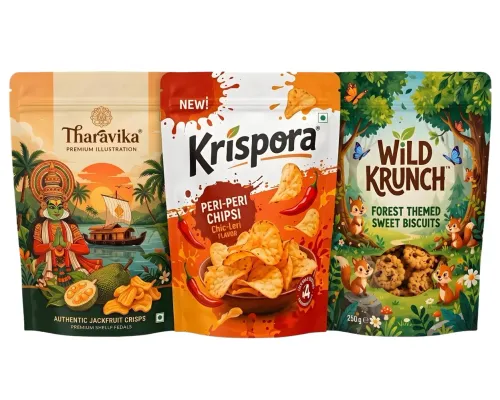
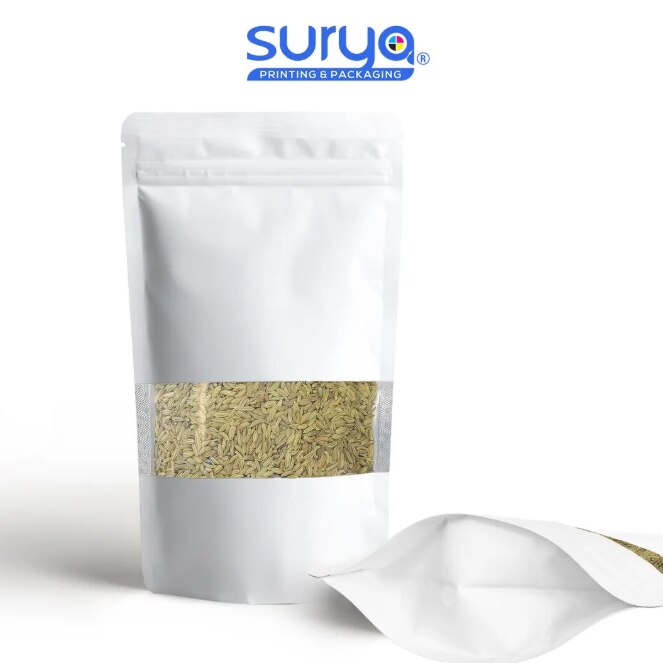
A clear stand-up pouch can improve product visibility, but the wrong film, size, closure or seal specification can shorten shelf life and create leaks. By the end, you will be able to compare pouch formats, calculate a workable size, test barrier and seal performance, and request comparable quotations from manufacturers.
Key takeaways
- Choose clear pouches only when product visibility outweighs light and oxygen risks.
- Match gusset depth, zipper type and fill weight to the product’s handling needs.
- Request film structure, barrier data and food-contact documentation from the manufacturer.
- Test filled pouches for seal strength, leaks and zipper performance before production.
Choose the pouch format by product risk, not appearance
A clear stand-up pouch is the right choice only when product visibility matters more than maximum barrier protection. Compare transparent pouch packaging options against oxygen, moisture, light, handling and resealing risks—not just shelf appearance.
| Option | Visibility and protection | Cost and best use |
|---|---|---|
| Full-clear PET/PE | Excellent visibility; basic oxygen and moisture protection; light-sensitive foods remain exposed | Lowest-cost choice for dry, fast-selling products with short shelf life |
| Clear barrier pouch with EVOH | Product remains visible; stronger oxygen barrier, but EVOH loses performance when humidity reaches the barrier layer | Higher cost for oxygen-sensitive snacks, powders and coffee; confirm the humidity design |
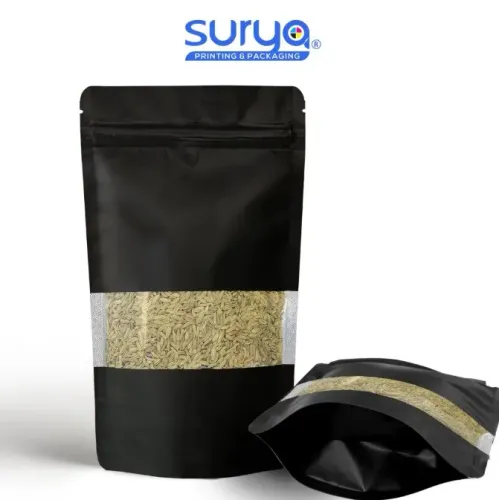
| Transparent-window printed pouch | Branding and light control improve while the window shows the product; protection depends on the opaque laminate | Mid-range presentation for products needing more shelf impact |
| Metallized or foil pouch | Strong light, oxygen and moisture barrier; not transparent | Choose for demanding shelf life when visibility is less important |
| Centre-seal bag or rigid container | Centre-seal bags can reduce material cost but usually lack stand-up stability; rigid packs protect shape but use more storage space | Consider when stacking, impact resistance or high-speed filling outweighs pouch presentation |
Give the manufacturer a measurable brief before comparing quotations:
- Finished width, height, bottom-gusset depth and filled weight
- Oxygen transmission rate and water-vapour transmission rate targets
- Zipper, spout or no-zipper requirement; a zipper is resealable, not automatically hermetic
- Print process, seal temperature, shelf life and storage humidity
- Hot-fill, pasteurization, retort, freezing or ambient conditions
- Filled-pouch samples tested for tipping, distortion, leaks and zipper contamination
Match gusset size, closure and fill weight to the product
Start with settled product volume, not the target weight alone. Fill a measuring container with the actual product, tap it as it settles, and record the volume at your intended fill weight.
Add enough headspace for expansion, dust control and closure clearance; then ask the supplier to convert that volume into internal width, filled height and bottom-gusset depth.
Use this pre-sample specification:
- Fill weight and settled volume in millilitres
- Largest particle or piece size
- Internal pouch width, filled height and gusset depth
- Required headspace above the product
- Whether the product is powder, liquid, granule or irregular pieces
- Filled pouch orientation during storage and display
A rough volume check is internal width × filled height × gusset depth, but the result is not a reliable stand-up prediction. Bottom folds, corner seals and product shape reduce usable volume. Require samples filled with your product at the real weight; an empty pouch can stand while a filled one tips or bulges.
| Closure | Choose it when | Main trade-off |
|---|---|---|
| No zipper | One-use packs, fast filling or contamination-prone products | Lower cost and faster sealing, but no resealing |
| Press-to-close zipper | Customers consume the pack over several uses | Better convenience, but the track occupies height and can trap product |
| Zipper plus primary heat seal | Food packs needing tamper evidence or hermetic protection | Resealing follows opening; the heat seal remains the protective closure |
A zipper does not replace the primary heat seal. Include zipper position, seal width and opening force in the sample approval, then check that the filled pouch still stands after transport simulation.
Check film structure, barrier performance and food-contact evidence
At 110 microns, PET plus polyethylene suits many dry, non-oxygen-sensitive foods, but thickness alone proves little. Ordinary PET/PE does not match the oxygen barrier of EVOH, metallized PET or aluminium foil, so it is a poor choice for coffee, nuts, dehydrated meat or foods that lose quality through oxidation unless test data supports it.
Ask a transparent stand up pouches manufacturer for these documents and results for the exact finished structure:
- Layer specification showing PET, polyethylene, adhesive, ink and each thickness; do not accept “food-grade film” as a substitute.
- Oxygen transmission rate and water vapour transmission rate, with test temperature and relative humidity. EVOH can lose oxygen-barrier performance as humidity rises unless another layer protects it.
- Declaration of compliance naming the intended food type, contact side and time-and-temperature conditions.
- Overall and specific migration reports covering the film, adhesive and inks, with the food simulants and test conditions stated.
- Ink and adhesive technical data confirming reverse printing and adequate adhesive curing. Poorly cured laminate can develop odour, delaminate or raise migration concerns.
- Filled-pouch samples tested with your food, checked for haze, whitening, odour, seal integrity and shelf-life performance.
A clear pouch also sacrifices light protection: metallized PET and foil block light but hide the product. For an oxygen-sensitive food, request a clear EVOH-based structure and compare its barrier results at your storage humidity, rather than assuming every transparent pouch offers the same protection.
Specify seal controls and test filled pouches before production
A pre-production trial should establish a seal window and test filled pouches, not just inspect flat samples. Record seal-jaw temperature, dwell time and pressure, then challenge the pouch after filling with the intended product.
- Define the operating range around the proposed seal settings. Run low, target and high temperatures; a cold seal leaks, while excess heat can distort polyethylene and weaken the laminate.
- Inspect every seal for powder, oil, liquid, wrinkles and incomplete fusion. Contamination trapped across the seal creates channels that a clean-looking pouch can hide.
- Measure seal strength using a peel test such as ASTM F88. Compare results across the seal width; a weak corner or inconsistent reading points to poor jaw alignment or uneven pressure.
- Check for leaks with a bubble-emission test such as ASTM D3078, or a suitable vacuum-chamber method. Use dye-penetration testing such as ASTM F3039 for narrow channels and pinhole paths.
- Drop filled pouches from the agreed handling height and perform compression or stacking trials. Repeat after the pouch reaches its intended fill weight and storage temperature.
- Stand samples upright for the planned storage period. Check bottom-gusset opening, tipping, bulging and seal distortion; an empty pouch can stand while a filled pouch collapses.
Choose a flexible packaging manufacturer for transparent stand up pouches that supplies test records, retained samples, batch traceability and approval samples. Approve the exact film, zipper, ink and seal settings before production, then require change control for any material or machine substitution.
Compare plain stock, labels and printed pouches in a supplier quotation
Compare quotations only after giving every supplier the same dimensions, filled weight, film structure, barrier target, closure, print area and delivery address. Plain transparent pouches in Coimbatore may come from stock, while labels add a separate application step and printed laminates add cylinders or plates, registration controls and setup waste.
| Option | Check in the quotation | Commercial effect |
|---|---|---|
| Plain stock pouch | Size, film thickness, available quantity, seal quality and dispatch date | Lowest setup cost; confirm stock is the specified structure, not a substitute |
| Plain pouch plus label | Label material, adhesive, application method, label MOQ and labour | Flexible artwork changes; adds application time and a label failure point |
| Printed pouch | Print process, cylinder or plate charges, colour proof, registration tolerance and curing time | Higher MOQ and waste; compare total landed cost, not pouch price alone |
Ask a flexible packaging manufacturer in Coimbatore these questions:
- What is the MOQ for this exact film structure and print method? A quoted “MOQ” is incomplete without the number of pieces, kilograms and allowed size variation.
- Which stages are in-house: extrusion, printing, lamination, slitting, conversion and testing? Outsourcing requires named process owners and traceability records.
- What are the lead times for artwork approval, cylinder manufacture, sampling, production and dispatch? Ask whether the clock starts after payment or proof approval.
- Is delivery factory-gate, courier, transport-to-door or scheduled split delivery? Confirm freight, insurance, unloading and damage-claim responsibility.
Surya Graphics can be compared on the same basis: request a written quotation separating pouch cost, setup charges, labels, freight, taxes and sample fees.
Related products
 | Packaging Pouch Both side transparent Ziplock Stand-Up Pouches Appearance Transparent in color | 3 sides sealed | Bottom gusset | Tear notch | Zipper | Full Transparent Technical Details Pet + Poly | 110 Microns... View product → |
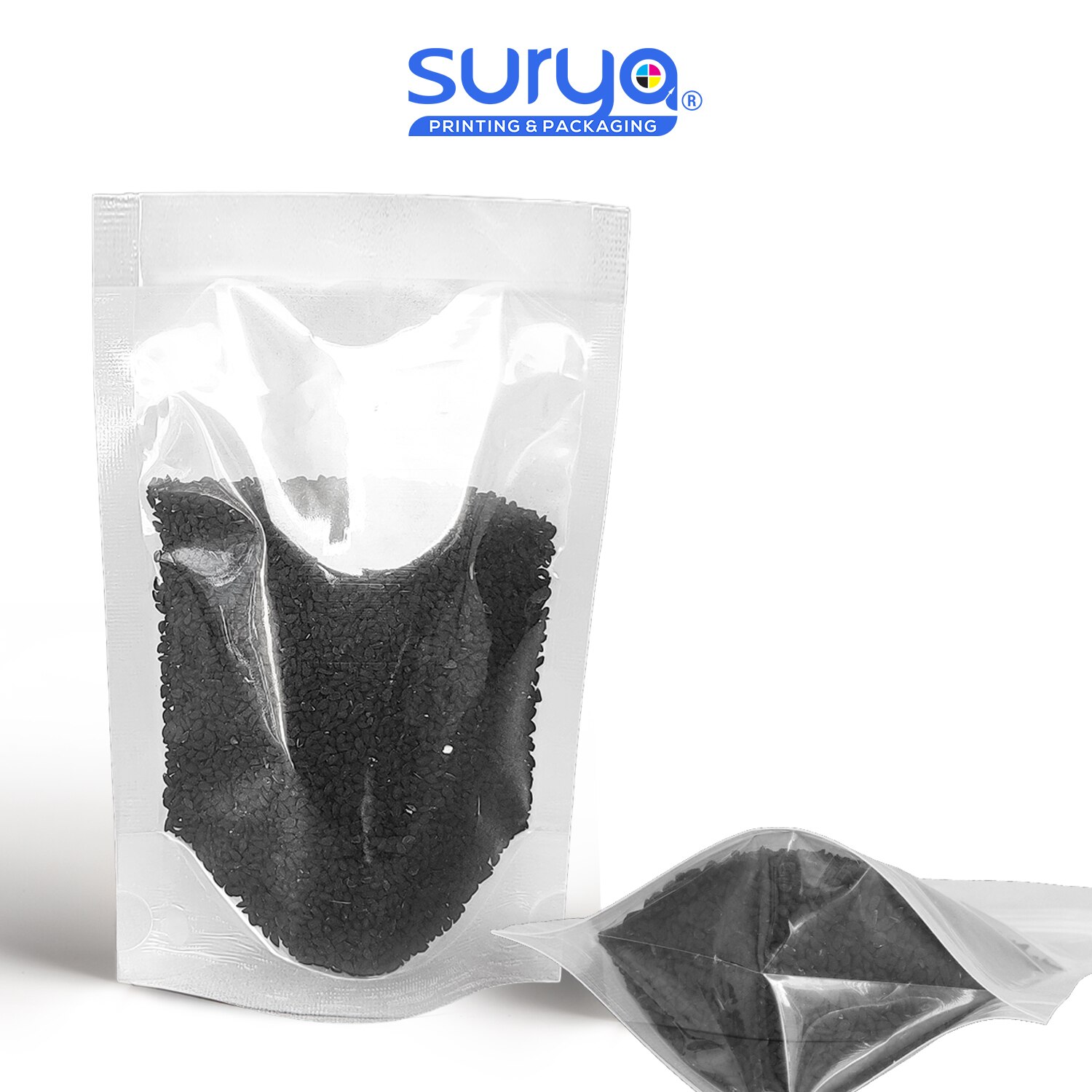 | Packaging Pouch Both side transparent Without Ziplock Stand-Up Pouches Appearance Transparent in color | 3 sides sealed | Bottom gusset | No Zipper | Full Transparent Technical Details Pet + Poly | 110 Microns | Heat... View product → |
Frequently asked questions
When should you choose transparent stand-up pouches?
Choose them when product visibility supports buying decisions and light exposure will not damage the contents. Use an opaque or metallised structure when oxygen, moisture or light requires stronger protection.
How do you match a pouch to product weight and type?
Specify the fill weight, product density, particle size, headspace and expected handling conditions. Use the gusset size and closure style that let the pouch stand securely without stressing its seals.
What should a transparent pouch quotation include?
Ask for the complete film structure, thickness, barrier data, food-contact evidence, pouch dimensions, closure type, printing method, minimum order quantity and lead time.
How should you test pouches before production?
Fill production-intent samples and check seal integrity, leakage, zipper operation, standing stability, drop resistance and seal performance across the planned filling conditions.
Related products
 | Packaging Pouch Orange Color Matte Finish transparent window Ziplock Inner Foil Stand-Up Pouch Appearance Matte Green in color | 3 sides sealed | Bottom gusset | Tear notch | Zipper | Inner foil | With window Technical Details Pet + Poly | 110... View product → |
 | Packaging Pouch Kraft transparent window Ziplock Inner Foil Stand-Up Pouch Appearance Brown in color | 3 sides sealed | Bottom gusset | Tear notch | Zipper | With window Technical Details Kraft + Poly | 110 Microns | Heat... View product → |
 | Packaging Pouch Red Color Matte Finish transparent window Ziplock Inner Foil Stand-Up Pouch Appearance Matte Red in color | 3 sides sealed | Bottom gusset | Tear notch | Zipper | Inner foil | With window Technical Details Pet + Poly | 110... View product → |
 | Packaging Pouch Black Color Matte Finish transparent window Ziplock Inner Foil Stand-Up Pouch Appearance Matte Black in color | 3 sides sealed | Bottom gusset | Tear notch | Zipper | Inner foil | With window Technical Details Pet + Poly | 110... View product → |
Keywords