A resealable clear pouch can make tablets, swabs, dressings or accessories easy to inspect, but visibility does not prove sterility, barrier performance or product compatibility. By the end, you will be able to decide whether you need an outer pouch or a validated sterile barrier, define the film and closure tests, and request the documents needed from a packaging supplier.
Key takeaways
- Use a ziplock pouch as an outer pack, not a sterile barrier.
- Match film barrier properties to moisture, light and oxygen sensitivity.
- Specify zipper, heat seal and integrity checks as separate requirements.
- Approve samples after testing size, print, seals and transport conditions.
Start by deciding whether the pouch is an outer pack or a sterile barrier
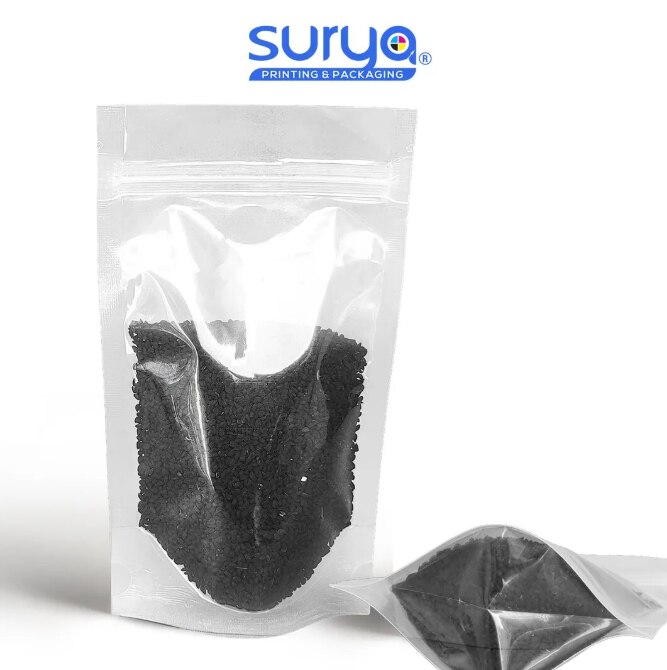
Use a transparent ziplock pouch as an outer pack when the healthcare product needs dust protection, grouping, visual inspection and repeated access. The zipper improves convenience; it does not create a sterile barrier, tamper evidence or validated microbial protection.
Choose this format for a non-sterile retail or transport pack when the contents are dry, sealed separately and unlikely to puncture the film. It can suit an instruction leaflet with a small accessory or a closed sample container, but confirm the product’s compatibility and required barrier performance first.
Do not use a conventional ziplock pouch as the primary pack for:
- A sterile dressing, swab or medical device requiring sterile presentation
- A pharmaceutical product that depends on controlled moisture, oxygen or light exposure
- A powder that can enter the zipper track and prevent full closure
- A sharp-edged blister, heavy item or product that can stress a 110-micron film
- A pack requiring validated tamper evidence or a defined sterile shelf life
Sterile medical-device packaging must be designed and validated to ISO 11607-1, with forming, sealing and assembly processes addressed under ISO 11607-2. A zipper alone is not evidence of compliance.
For transparent ziplock pouches for healthcare packaging in Coimbatore, specify whether the pack is an outer layer or sterile barrier before requesting samples. Healthcare product packaging pouches for food or nutraceuticals also require applicable FSSAI food-contact and labelling compliance; food-grade material alone does not prove suitability for medical or pharmaceutical use.
Match transparency and barrier performance to the product inside
Clear ziplock stand up pouches suit dry, non-light-sensitive contents that benefit from visual inspection, such as tablets, capsules, individually wrapped swabs, dressings, gloves and small accessories. Powders, blister strips and sample containers need a moisture, puncture and fit assessment before selection; visibility alone does not prove protection.
| Option | Barrier performance | When it applies |
|---|---|---|
| Clear film | Shows the contents but exposes them to light; barrier depends on the film layers and seal | Non-light-sensitive products, inspection packs and outer packaging |
| Opaque film | Blocks visible light and conceals the contents; choose a structure with the required moisture and oxygen barrier | Light-sensitive tablets, diagnostic components, privacy-sensitive items or products needing stronger protection |
| Metallised film | Provides a stronger light barrier and improved oxygen and moisture resistance than a basic clear structure | Light- or oxidation-sensitive products, long storage periods and demanding transport conditions |
Transparent food packaging pouches are not automatically suitable for healthcare products. Food or nutraceutical contents require food-contact compliance under the applicable FSSAI requirements, while medicines, devices and diagnostic products need product-compatibility evidence, including extractables and leachables where relevant.
A metallised layer is the safer choice when light degrades the product; retain a clear outer layer only if it does not compromise that barrier. Test the actual structure through Coimbatore’s heat, humidity and transport conditions, because moisture can reduce barrier performance and cause seal or adhesive failures.
Specify zipper, heat seal and package-integrity controls separately
Approve the zipper, heat seal and whole-pouch integrity as three separate controls; passing one does not prove the others.
| Control | Test or evidence | Failure it exposes |
|---|---|---|
| Zipper | Run the expected opening-and-reclosure cycles, then repeat the test after exposing the track to powder, fibres and product residue. Record closure engagement and opening force before and after cycling. | A track that no longer meshes can leave the pouch apparently closed but unsecured. |
| Heat seal | Test the top seal, side seals and zipper-to-film interface separately. Specify seal width, minimum seal strength and the method, such as ASTM F88/F88M, then inspect for channels and incomplete fusion. | A functional zipper cannot prevent leakage through a weak or contaminated seal. |
| Package integrity | Select a validated method for the actual risk: ASTM F2096 bubble emission for gross leaks, vacuum decay or pressure decay for suitable structures, and dye penetration only for detectable channels. Define the leak limit. | A dye test can miss defects that another integrity method detects. |
For healthcare product packaging pouches holding tablets, powders, swabs or dressings, add puncture, drop and particulate-shedding checks to the risk assessment. Confirm that the film layers, thickness, sealant and zipper tolerate the intended handling and sterilisation process; clear appearance proves none of these.
For food or nutraceutical contents, assess the pouch against FSSAI Packaging Regulations and its intended food-contact use, not a generic healthcare claim.
Define size, construction, printing and transport conditions before ordering
A pouch fits only after you provide the product’s packed length, width, height, fill weight and any sharp edges. Add clearance for the zipper, heat-seal margin, leaflet and hand access; specify the bottom gusset and usable internal volume for clear ziplock stand up pouches.
1. Send a filled sample or dimensional drawing, not just the product name. State whether the pack holds tablets, a vial, blister strips, swabs, dressings, gloves or accessories, and define the maximum weight. Test the actual fill so an undersized gusset, stressed zipper or folded blister does not cause seal failure.
2. Specify the film structure and thickness by performance, not by nominal thickness alone. Compare puncture, drop and compression resistance for heavy contents or sharp blister corners, then define the zipper type, seal width and tolerances. Humidity can reduce barrier performance, cause adhesive failure, create blocking and change seal results.
3. Approve artwork with its intended print position. Reverse printing between film layers protects graphics from abrasion and contents; surface printing needs suitable overprint protection where condensation, handling or repeated reclosure could remove ink. Require ink adhesion, rub-resistance and migration-risk checks, plus the correct lot, batch, expiry, storage and traceability information for the product category.
4. Write the transport profile for transparent ziplock pouches in Coimbatore into the specification: warehouse temperature and relative humidity, monsoon exposure, vehicle heat, transit duration, stacking and drop handling. Qualify finished pouches against that profile, because a film that performs in a dry room can lose seal consistency during humid storage.
Use a supplier checklist before approving transparent pouches in Coimbatore
Ask the manufacturer for a controlled approval file, not a sample pouch alone. For transparent ziplock pouches for healthcare packaging in coimbatore, the file should identify the product category and intended use: medical device, medicine, cosmetic, food, nutraceutical, or outer pack.
1. Request the material specification and certificate of analysis. It should state each film layer, thickness tolerance, sealant, adhesive, zipper material, lot number and food-contact status. For food or nutraceutical contents, require evidence against FSSAI Packaging Regulations rather than accepting “healthcare grade” as proof.
2. Request a dimensioned drawing showing finished width, height, gusset, fill zone, zipper position, seal width and tolerances. Approve a filled sample with the actual vial, blister, powder, swab or leaflet inside.
3. If the pouch is a sterile barrier, require the validation plan and reports for ISO 11607-1 and ISO 11607-2, including forming, sealing and assembly controls. A press-to-close zipper alone proves reclosure, not sterility or tamper evidence.
4. Require seal-strength, leak, drop, compression and zipper-engagement results after the planned opening-and-reclosure cycles. Test with realistic powder, fibres or residue; contamination can stop the tracks engaging.
5. Require transport evidence using your warehouse, monsoon and vehicle temperature and relative-humidity profile. Ask how Surya Graphics controls artwork revisions, batch coding, expiry or use-by fields, storage instructions, traceability and change notification.
Do not approve transparent ziplock pouches in coimbatore until the signed specification, test reports, approved artwork and retained production sample match.
Related products
 | Packaging Pouch Both side transparent Ziplock Stand-Up Pouches Appearance Transparent in color | 3 sides sealed | Bottom gusset | Tear notch | Zipper | Full Transparent Technical Details Pet + Poly | 110 Microns... View product → |
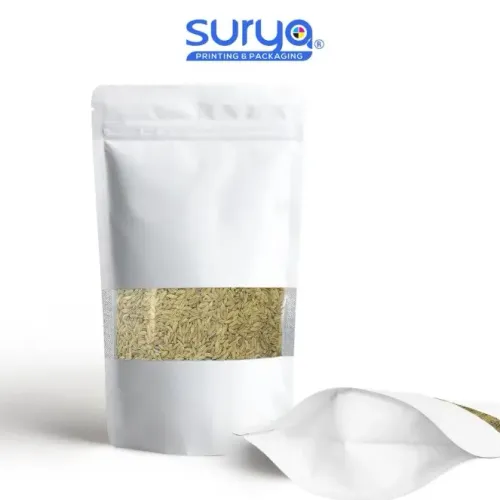
 | Packaging Pouch White Color Matte Finish transparent window Ziplock Inner Foil Stand-Up Pouch Appearance Matte White in color | 3 sides sealed | Bottom gusset | Tear notch | Zipper | Inner foil | With window Technical Details Pet + Poly | 110... View product → |
Frequently asked questions
Can a transparent ziplock pouch be used as a sterile barrier?
No. Use it as an outer pack for dust protection, grouping, visual inspection and repeated access. Sterile products need a validated sterile barrier system.
How do you choose the right transparent pouch material for healthcare products?
Match the film structure to the product’s sensitivity to moisture, oxygen, light, puncture and chemical contact. Transparency is not proof of barrier performance.
What should you specify for the zipper and heat seal?
Define zipper function, seal width, seal strength, leak testing, seal-temperature limits and package-integrity inspection separately. A working zipper does not prove a sealed package.
What information should you give a pouch supplier in Coimbatore?
Provide finished dimensions, product weight and shape, pouch construction, opening style, zipper position, print requirements, pack quantity, transport route and storage conditions.
Related products
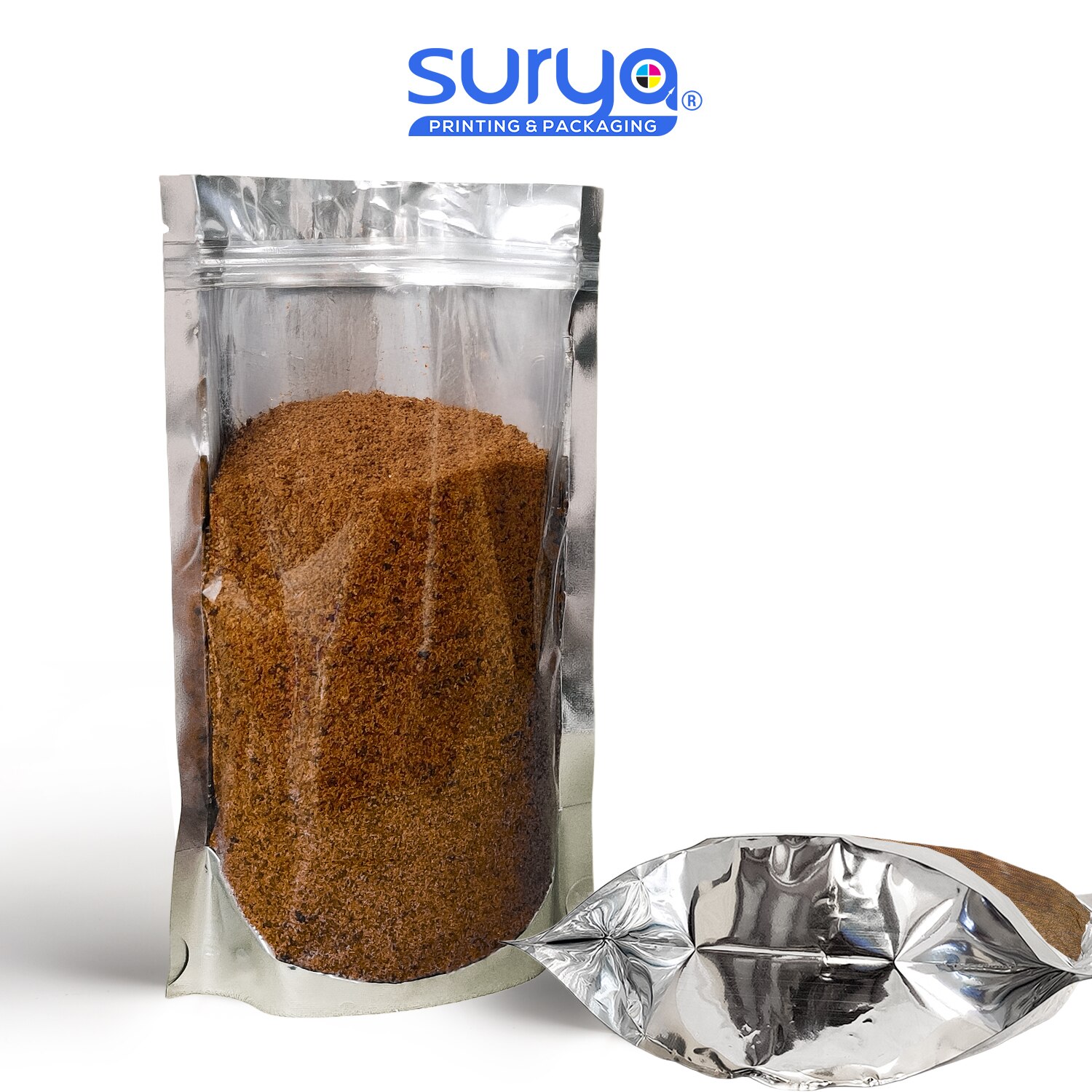 | Packaging Pouch One side Transparent silver Ziplock Stand-Up Pouch Appearance Silver in color | 3 sides sealed | Bottom gusset | Tear notch | Zipper | One side transparent Technical Details Pet + Poly | 110 Microns |... View product → |
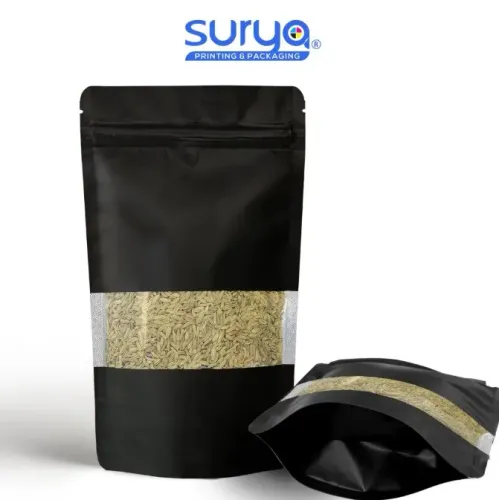
 | Packaging Pouch Black Color Matte Finish transparent window Ziplock Inner Foil Stand-Up Pouch Appearance Matte Black in color | 3 sides sealed | Bottom gusset | Tear notch | Zipper | Inner foil | With window Technical Details Pet + Poly | 110... View product → |
 | Packaging Pouch Orange Color Matte Finish transparent window Ziplock Inner Foil Stand-Up Pouch Appearance Matte Orange in color | 3 sides sealed | Bottom gusset | Tear notch | Zipper | Inner foil | With window Technical Details Pet + Poly | 110... View product → |
Keywords