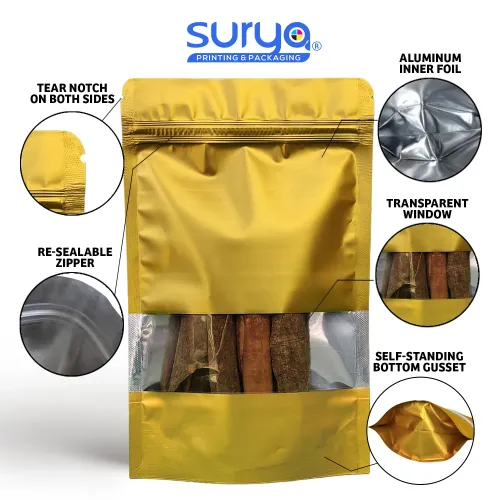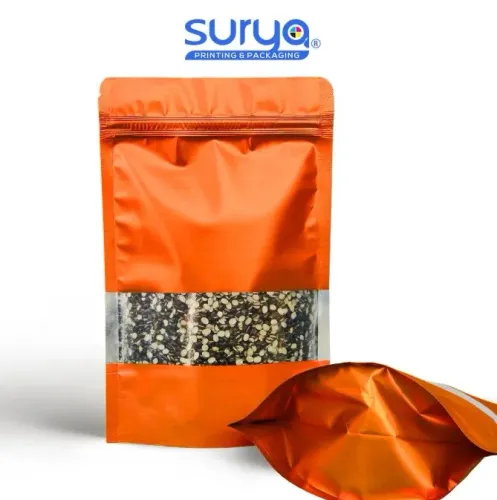
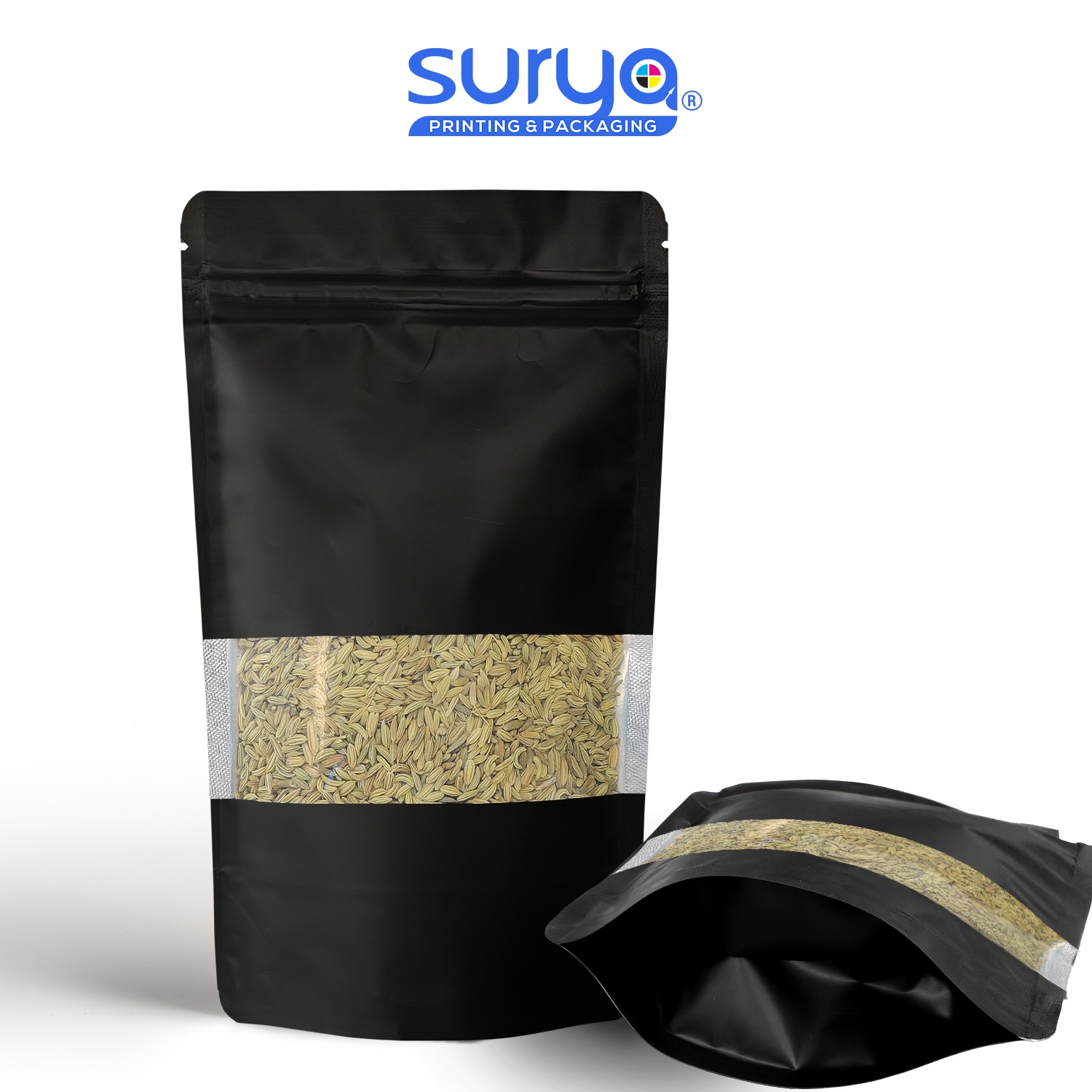
Black packaging can create a premium shelf signal, but colour alone does not prove better protection, longer shelf life or stronger sales. You will be able to compare the commercial cost, select the right black pouch format and demand the barrier and seal evidence needed before approving a production run.
Key takeaways
- Use high contrast and restrained typography to make black pouches easier to shop.
- Compare total print, label, setup and labour costs before choosing custom printing.
- Match pouch format and barrier performance to the food, channel and shelf life.
- Request oxygen, moisture, seal-strength and migration test results before production.
Do black pouches make food brands look more valuable on the shelf?
Black can make a food brand look more valuable, but it does not guarantee stronger purchase intent. Black custom printed pouches for food brands work best when high contrast, restrained typography and a clear product promise support the colour.
PackagingShelf visibilityPremium perceptionPurchase intentBlackStrong against pale shelves; can disappear beside dark packsHigh for coffee, snacks and specialty foodsStrong when branding is legible and the product feels distinctiveWhiteClean and highly readable; less visually dominantModern, hygienic and accessibleReliable for everyday foods and health-led productsKraftNoticeable through its natural texture and warm toneCraft, organic and small-batch cuesEffective when sustainability or simplicity drives the choiceSilverReflective and attention-grabbing under retail lightingTechnical, contemporary and performance-ledUseful for snacks and functional products, but can feel less warmBright coloursUsually the fastest visual interruption on a crowded shelfEnergetic, youthful or flavour-led rather than automatically premiumStrong for impulse purchases when colour coding is clear
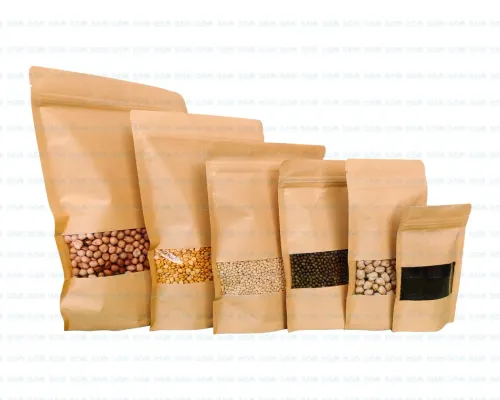
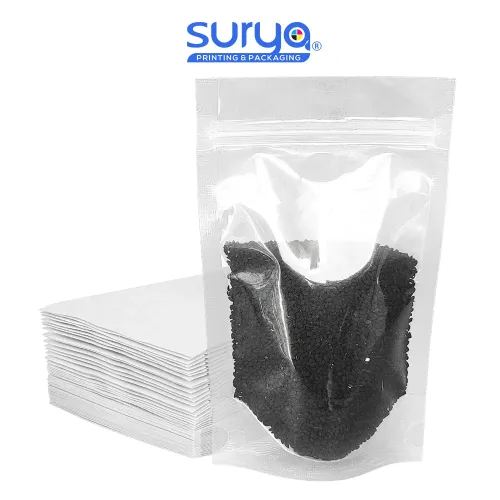
A black pouch can also hide the contents and protect light-sensitive food, but opacity removes the visual proof that helps shoppers judge nuts, grains or snack quality. A transparent window improves that reassurance while reducing printed area and barrier coverage.
Treat colour as a positioning tool, not evidence of quality. A matte finish, expensive-looking artwork or black film cannot prove barrier performance, recyclability or food-contact compliance; unreadable text or weak contrast can reduce confidence instead.
When is custom printing cheaper than a plain pouch with a label?
Compare total cost per accepted filled pack, not the quoted price of an empty pouch. Custom printing becomes cheaper when your volume spreads artwork, cylinders or plates, colour setup and startup waste across enough units, while a label continues adding material and application cost to every pack.
OptionCosts to includeMain cost riskBlack custom printed pouchesArtwork and proofing; cylinders or plates; ink and setup; minimum order; registration waste; pouch conversion; zipper or spout; rejected packsA design change can leave obsolete stock and require new toolingPlain pouch with adhesive labelPlain pouch; label artwork and printing; label die or setup; label material; application labour or equipment; alignment rejects; label wastePer-pack cost rises with larger labels, slower packing and manual application
Add storage, freight, and the cost of cash tied up in the minimum order. A plain pouch can win for a test launch, seasonal flavour or frequent artwork changes, even when its unit quote looks higher.
Request a run-based comparison for the same size and closure. Include delivered components, setup waste, accepted yield, filling-line speed and rejected seals. Printed stand up pouches become financially stronger when the design will remain unchanged through several production runs and the order volume is large enough to amortise tooling.
Digital printing removes cylinder or plate charges for shorter runs, but compare its unit price, finish and colour result against conventional printing before choosing.
Which black pouch format fits your product and selling channel?
Choose opaque black for light-sensitive, premium products; choose a window when seeing the food helps close the sale. Product and channel matter more than the colour alone.
OptionBest fitMain trade-offOpaque black pouchCoffee, spices, powders, oily snacks, or products needing light protection; 100 g to 1 kg packs sold through supermarkets, marketplaces, or premium retailHides product variation and gives maximum printed area, but shoppers cannot inspect the contentsBlack pouch with transparent windowNuts, granola, chips, dry fruits, grains, and visually distinctive snacks where colour, size, or ingredient quality drives purchaseShows the product and builds trust, but reduces printed space and can interrupt barrier coverageSmall premium pack50 g to 200 g trial, gifting, or impulse formats with a high target price per kilogramMatte finish and strong graphics support positioning, but the packaging cost consumes more of the selling priceLarge value pack500 g to 1 kg family or refill formats competing on priceA window can reassure shoppers, while excessive decoration can undermine value perception
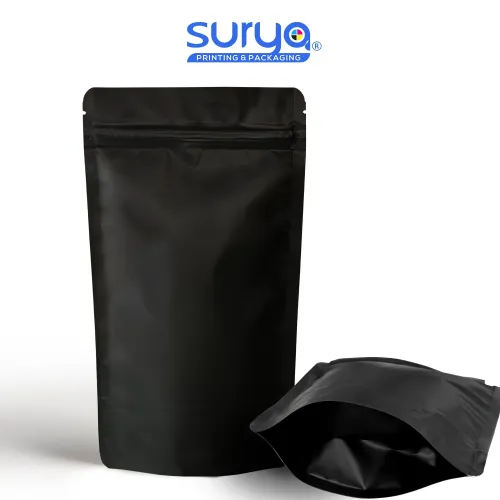
For a black matte food pouch, specify the product, fill temperature, pack weight and target shelf life before approving artwork. Select the laminate for oxygen transmission rate, water-vapour transmission rate and light sensitivity; black ink alone proves none of these.
Use opaque printed stand up pouches for dark-store delivery or e-commerce when presentation and protection outweigh inspection. For open-shelf retail, add a window only when visible product quality differentiates you. Confirm that the window, zipper and heat seals survive the filling line and the required shelf life.
What barrier and seal tests must black pouches pass?
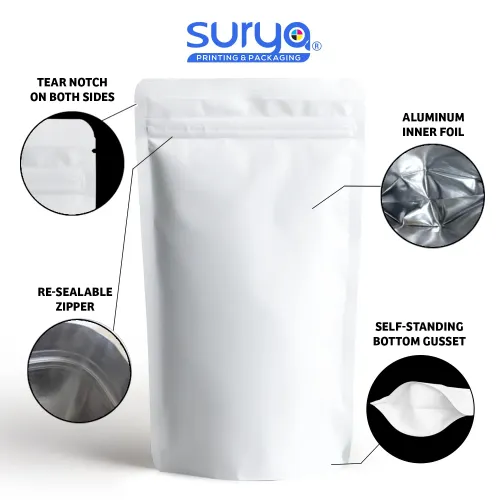
Black colour proves nothing about barrier performance. A black matte food pouch can have a matte varnish over PET, while oxygen and moisture protection come from aluminium foil, metallised PET, EVOH or a coated high-barrier film. Request measured OTR, WVTR and light-transmission values for the complete laminate, tied to your target shelf life.
ProductEvidence to demandFailure to rejectOily snacks and dry fruitsOil-resistant sealant, OTR/WVTR limits, and seal strength after fillingGrease-wet seals, odour pickup or brittle sealsRoasted foods and coffeeAroma-transmission data, low OTR, and a tested one-way degassing valve for gas-releasing productsStale flavour, swelling, leaking valve or delaminationSpices and powdersLow WVTR, aroma barrier, dust-free seal area and zipper repeatabilityCaking, aroma loss, powder in the seal or zipper failure
Ask for these test records before approving black custom printed pouches for food brands:
- ASTM D3985 oxygen transmission and ASTM F1249 water-vapour transmission results
- Light-transmission data; do not treat carbon black as a substitute for foil or metallised film
- ASTM F88 seal-strength results, ASTM F2029 heat-seal settings, and leak testing such as ASTM D3078
- Laminate bond or delamination results after filling, storage and transport
- Zipper opening force, reseal cycles, tear-notch initiation and controlled tear direction
- Filled-pouch drop and compression tests, including ASTM D5276 where applicable
Set acceptance limits for your product, fill temperature and filling line. A pouch that passes empty-film tests can still fail after heat, oil, powder contamination or rough handling.
How should you compare suppliers before approving a production run?
Approve a supplier only against one written specification, not a sample that merely looks good. Include:
- Product, pack weight, fill temperature, target shelf life, pouch dimensions, gusset, zipper or spout, tear notch and expected monthly volume.
- Laminate structure, total thickness, black opacity or light-transmission limit, OTR and WVTR targets, print process, colour tolerances and artwork-change charges.
- Food-contact declaration, migration-test report for the actual structure, ink and adhesive, batch traceability, and seal-test method.
- Recyclability claim tied to the proposed material structure and the collection system available in your market.
Ask Surya Graphics to run the same filled product on your actual line, because a pouch that passes an empty-pack inspection can still jam, wrinkle or leak after filling.
Compare suppliers using accepted filled-pack cost: total pouch, tooling, freight, setup waste and testing cost divided by saleable packs, not quoted pouch price.
Measure each trial on the same run:
CheckSupplier ASupplier BPass conditionTrial yieldRecordRecordSaleable packs ÷ packs startedLeak rateRecordRecordZero critical leaks; investigate every failureLine performancePacks/minute; stoppagesPacks/minute; stoppagesMeets your production targetSeal robustnessSeal resultsSeal resultsPasses your specified method and temperature windowShelf-life evidenceDocumentsDocumentsSupports the product and target durationRecyclabilityStructure and claimStructure and claimClear, documented route
Reject any sample that needs slower filling, excessive manual handling or unexplained seal variation; the apparent unit-price saving disappears in accepted-pack cost.
Related products
 Packaging Pouch
Black Color Matte Finish Ziplock Inner Foil Stand-Up Pouch
Appearance Matte Black in color | 3 sides sealed | Bottom gusset | Tear notch | Zipper | Inner foil | Without window Technical Details Pet + Poly |...
View product → Packaging Pouch
Black Color Matte Finish transparent window Ziplock Inner Foil Stand-Up Pouch
Appearance Matte Black in color | 3 sides sealed | Bottom gusset | Tear notch | Zipper | Inner foil | With window Technical Details Pet + Poly | 110...
Frequently asked questions
- Do black pouches make food brands look more valuable on the shelf?
- They can create a premium impression when high contrast, restrained typography and a clear product promise support the black colour. Black alone does not guarantee stronger purchase intent.
- When is custom printing cheaper than a plain pouch with a label?
- Compare the complete cost of pouch printing, cylinders or plates, minimum order quantity, labels, application labour, rejects and inventory. Custom printing becomes more economical when volumes justify its setup cost and label handling adds recurring expense.
- Which black pouch format fits a food product and selling channel?
- Choose a stand-up pouch for shelf display, a flat pouch for lighter products and compact shipping, or a spouted pouch for pourable foods. Match the size, closure and filling method to the product and sales channel.
- What barrier and seal tests must black pouches pass?
- Request oxygen transmission rate, water vapour transmission rate, seal-strength and leak-test results. Ask for food-contact migration documentation and confirm that the laminate, ink and adhesive suit the product and intended shelf life.
- How should you compare black pouch suppliers before approving production?
- Compare material structure, print proof, colour consistency, pouch dimensions, zipper and seal performance, test reports, minimum order quantity, lead time, quality controls and replacement terms.
Keywords