A clear resealable pouch can improve shelf visibility, but it can also expose food to light, reveal inconsistent fills and provide less barrier protection than its appearance suggests. You will be able to match the pouch structure, capacity and closure to the product, then define the tests a supplier must pass before shipment.
Key takeaways
- Check light, moisture and oxygen sensitivity before choosing clear film.
- Use foil or metallised film when light or oxygen threatens shelf life.
- Match pouch width, gusset and fill weight to the product’s geometry.
- Test the first heat seal separately from the zipper reclosure.
Start with the product’s barrier requirements, not its appearance
Choose transparent ziplock pouches for retail products when the product tolerates ambient light and needs moderate protection from moisture, oxygen and handling. Dry snacks, pulses, granola, pasta, pet treats and short-shelf-life confectionery often fit this brief, provided testing confirms the required shelf life.
Clear film creates a shelf-life risk when light accelerates oxidation, fades colour or damages light-sensitive vitamins and ingredients. Coffee, nuts, oily snacks, spices, powdered dairy products and fortified foods may need an opaque, metallised or foil-containing structure instead of a pouch transparent on both faces.
Ask for oxygen-transmission rate and water-vapour-transmission rate at stated temperature and relative humidity; “clear” does not identify either value. Also confirm oil resistance, chemical compatibility and seal performance. A PET/PE pouch may suit dry goods, but it is not automatically suitable for hot-fill, retort, freezer or microwave use.
- Use both-side transparency when shoppers need to inspect whole pieces, colour or fill level and the product has passed light-exposure testing.
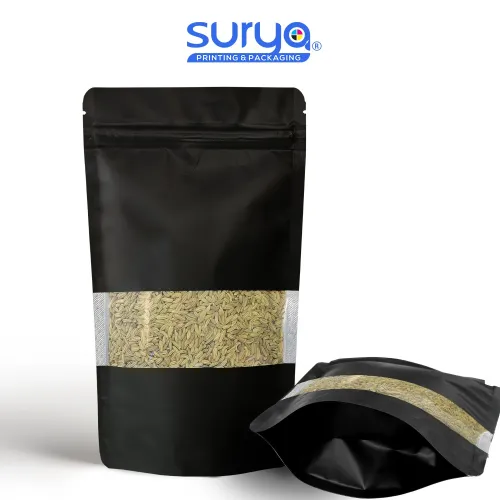
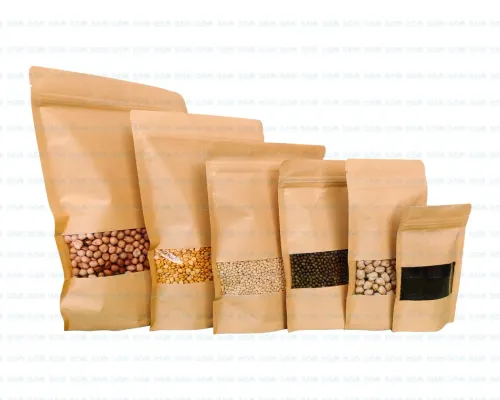
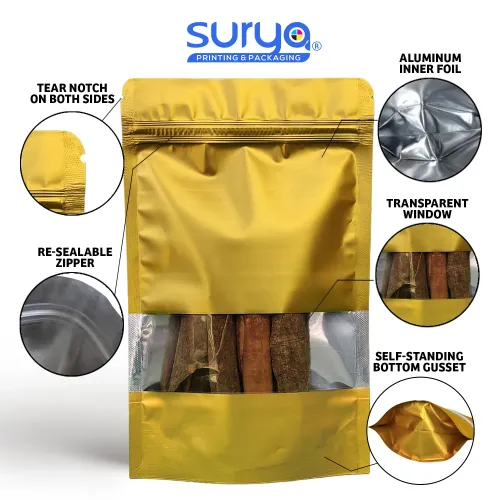
- Choose a one-side window or kraft-window construction when visibility helps selling but the package needs more light protection.
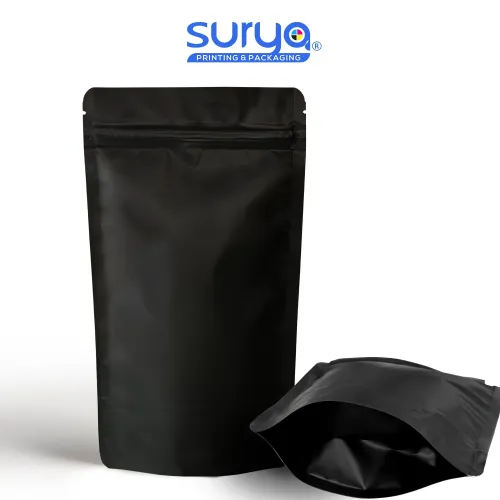
- Choose metallised or foil laminate when oxygen, moisture or light threatens the declared shelf life.
- Add a qualified heat seal above the zipper for leak protection and tamper evidence; the zipper is a reclosure feature, not a hermetic barrier.
OptionMain protectionBest fitClear PET/PEVisibility, basic barrierAmbient dry goodsMetallised filmStrong light and oxygen reductionCoffee, oily snacksFoil laminateHighest light barrierHighly light-sensitive products
Choose clear, foil, metallised, kraft-window or opaque film
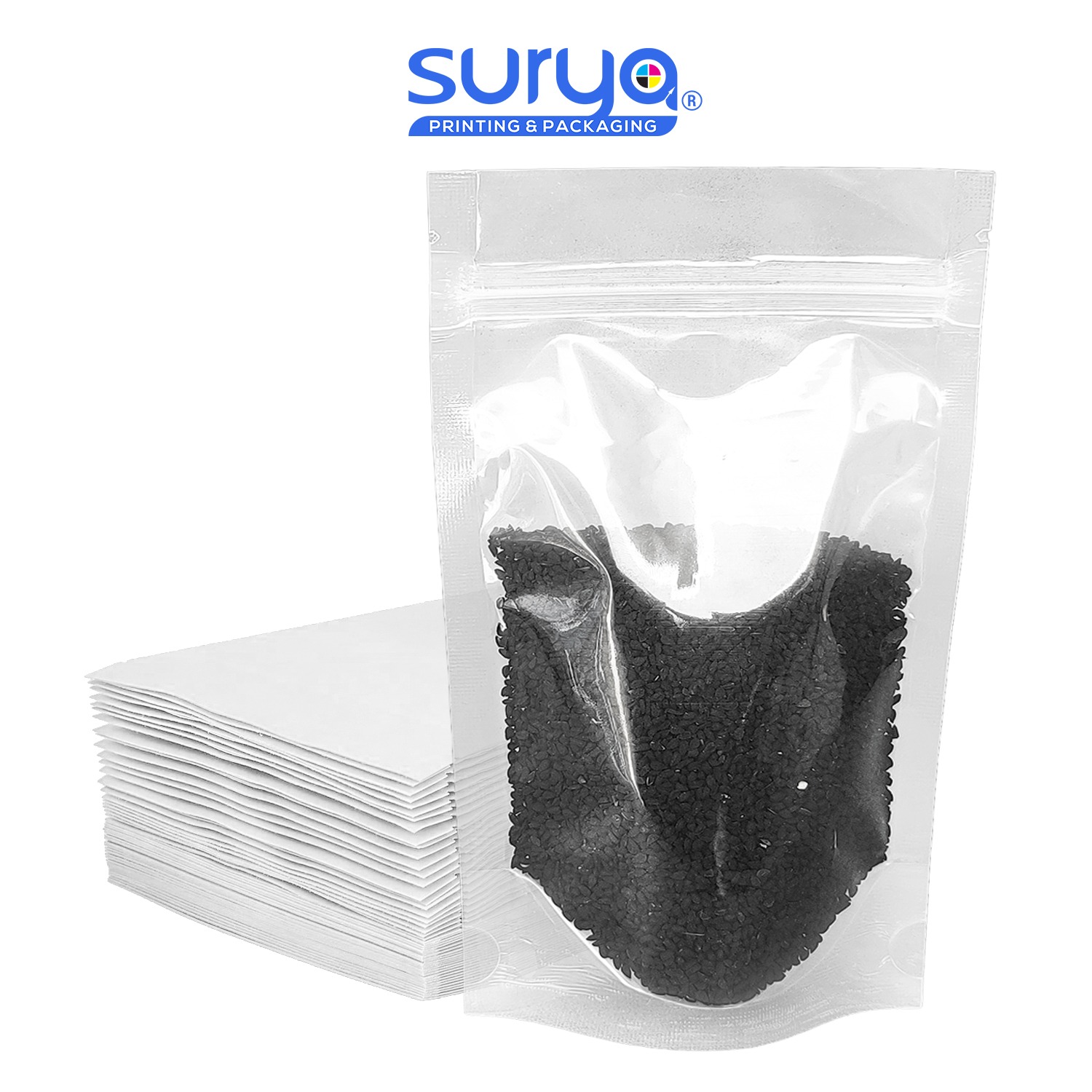
Both side transparent ziplock pouches are the better choice when the product’s appearance, colour and fill level help sell it, and light will not shorten its shelf life. They suit distinctive dry snacks, confectionery, pulses and premium ingredients that shoppers need to inspect from either face.
ConstructionChoose it whenMain compromiseBoth-side-transparentYou need maximum product visibility, front-and-back merchandising and quick stock inspectionLight reaches the contents from both faces, and settling or underfilling remains visibleOne-side-transparentThe product benefits from a viewing window but needs printed coverage or extra protection on the backLess visibility, but more space for graphics and handling informationFoil-linedOxygen, moisture, aroma or light protection is critical, such as for sensitive powders or high-value foodsThe product cannot be inspected, and recycling options depend on the laminateMetallised filmYou need stronger light and moisture protection than clear film without a fully opaque appearanceThe reflective layer reduces visibility and requires verified barrier dataKraft-windowA natural, tactile shelf presentation matters and a small viewing area is enoughThe kraft layer hides most of the product and can complicate consistent graphicsFully opaque filmLight-sensitive contents, privacy or a premium printed presentation outweigh product visibilityShoppers cannot check colour, fill level or foreign material before purchase
Request the actual film structure, oxygen-transmission rate and water-vapour-transmission rate at stated test conditions; “clear” alone proves nothing. For retail packaging pouches that will face abrasion, use reverse printing or a protective coating, and validate any retort, hot-fill, freezer or microwave claim separately.
Match the filled product to the pouch geometry
Capacity comes from the filled product’s volume and weight, not the pouch’s nominal size. Choose a pouch that holds the target fill without compressing fragile pieces, then confirm the settled fill level after vibration and storage; excess headspace makes a clear stand up pouch slump, while too little leaves product in the seal.
Use a fill trial to make these geometry decisions:
- For every format, record finished width and body height, then set the bottom-gusset depth to support the filled weight and keep the centre of gravity low.
- Irregular snacks need enough width for pieces to fall without bridging; a narrow pouch creates voids, bulges and uneven shelves.
- Powders need a controlled fill height and a zipper positioned well above the powder line; dust trapped in the closure can stop it engaging.
- Pulses need gusset volume and a strong base because their weight concentrates at the bottom rather than spreading evenly.
- Products that settle need capacity above the initial fill level, with the zipper still clear after settling; otherwise the pouch becomes short, top-heavy and difficult to reclose.
Place the zipper above the maximum settled product level and leave a clean seal area beneath the top seal. Check filled samples upright and lying flat, because a pouch that stands before settling can lean or collapse after transport. Confirm the final width, height and gusset with the actual product, not an empty sample.
Treat the zipper as a reclosure feature, then validate the first seal
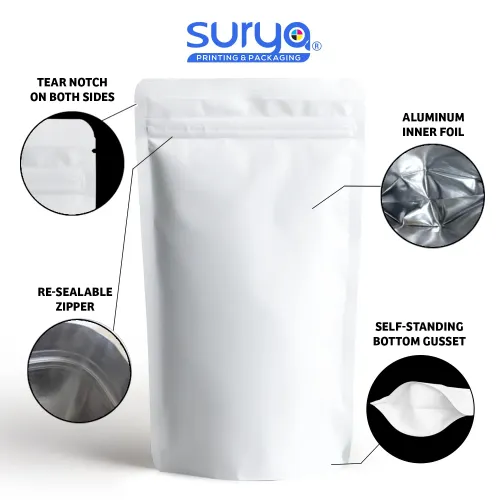
A zipper proves reclosure, not a hermetic barrier. Use a qualified heat seal above the zipper when the product needs leak protection or tamper evidence; add a tear notch or perforation so opening the pack visibly breaks that seal.
1. Define the closure job. Confirm that the zipper profile engages across its full width, opens without excessive force, and remains usable after repeated opening and closing. Check that the zipper position leaves enough headspace for fingers without reducing the heat-seal area.
2. Validate the first seal on filled packs, not empty samples. Inspect the seal for wrinkles, channels, powder, oil or product caught in the seal. Measure seal width, temperature, dwell time and pressure, then establish an acceptable seal-strength range with a seal-strength test such as ASTM F88/F88M.
3. Challenge the finished pack. Use a leak test such as ASTM D3078 for gross leaks, and add drop, compression and vibration testing that matches distribution. A strong zipper cannot compensate for a pinhole or weak top seal.
4. Sample production at the beginning, middle and end of a run. Record zipper alignment, seal appearance, seal strength and leaks; quarantine packs when any result falls outside the approved range.
5. Run separate validation for hot-fill, retort, freezer or microwave use. Ordinary ziplock packaging pouches can deform, delaminate or lose seal integrity in those conditions; approve the film, adhesive, zipper and sealing process as one construction.
Write a supplier specification before approving the retail pack
A supplier quote is incomplete without a finished-pouch specification. Give every bidder the same requirements so you compare performance, compliance and appearance rather than attractive samples alone.
1. State the construction and performance targets: film polymers, total thickness and tolerance, pouch dimensions, gusset depth, zipper position, seal width, seal-strength minimum, heat-seal temperature range, oxygen transmission rate, water-vapour transmission rate and puncture resistance. Require filled-product trials for powder leakage, oil migration, settling and zipper function.
2. Name the market and request a food-contact declaration, migration test results, ink and adhesive compliance documents, batch traceability and the required label area. For United States food, reserve space for identity, net quantity, ingredients, allergens, Nutrition Facts and responsible-party information; transparency does not remove those obligations.
3. Define the sustainability claim you will accept. If you request mono-PE or mono-PP retail packaging pouches, require evidence for the intended recycling stream and record the trade-offs in barrier, stiffness, printability, seal temperature and puncture resistance. Do not approve “recyclable” from a material name alone.
4. Set presentation tolerances: acceptable haze, wrinkles, bubbles, ink scuffing, colour variation, seal distortion, headspace and visible fill level. Specify reverse printing or a protective coating where rubbing could damage graphics, and request a production sample. When comparing a quote from Surya Graphics, use these same filled-pack checks rather than catalogue photographs.
Related products
 Packaging Pouch
Both side transparent Ziplock Stand-Up Pouches
Appearance Transparent in color | 3 sides sealed | Bottom gusset | Tear notch | Zipper | Full Transparent Technical Details Pet + Poly | 110 Microns...
View product → Packaging Pouch
Kraft transparent window Ziplock Inner Foil Stand-Up Pouch
Appearance Brown in color | 3 sides sealed | Bottom gusset | Tear notch | Zipper | With window Technical Details Kraft + Poly | 110 Microns | Heat...
Frequently asked questions
- When are transparent ziplock pouches suitable for retail products?
- They suit products that tolerate ambient light and need moderate protection from moisture, oxygen and handling, including many dry snacks, pulses, granola, pasta and pet treats. Confirm suitability with shelf-life testing.
- Should you choose clear, foil, metallised, kraft-window or opaque film?
- Choose clear film when product visibility matters and light exposure is acceptable. Choose foil or metallised film for stronger light and oxygen protection, kraft-window film for a paper-look pack with a viewing area, and opaque film when the product needs maximum light shielding.
- Why must pouch geometry match the filled product?
- The product’s fill weight, particle size, bulk and settling behaviour determine the pouch width, height, gusset and usable volume. A mismatch can cause poor presentation, underfilled packs or product caught in the seal.
- Is the zipper the pouch’s primary seal?
- No. The zipper provides reclosure after opening; the first heat seal protects the unopened product. Validate seal strength, leak resistance and zipper alignment on filled production samples.
- What should a supplier specification include?
- Specify product type, fill weight, dimensions, film structure, barrier targets, zipper style, seal area, print requirements, regulatory documents, testing method, tolerances and delivery quantity.
Related products
 Packaging Pouch
White Color Matte Finish transparent window Ziplock Inner Foil Stand-Up Pouch
Appearance Matte White in color | 3 sides sealed | Bottom gusset | Tear notch | Zipper | Inner foil | With window Technical Details Pet + Poly | 110...
View product →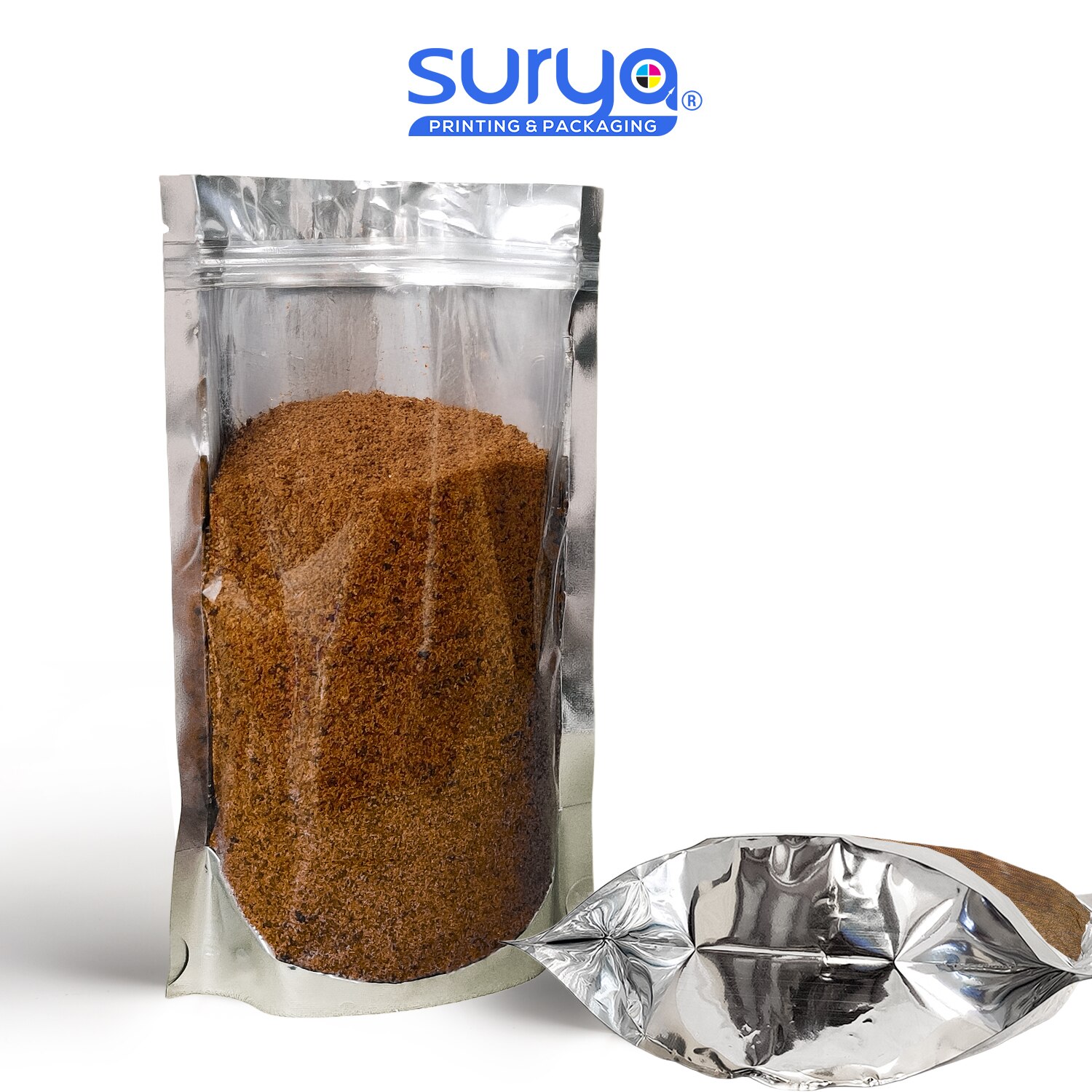 Packaging Pouch
One side Transparent silver Ziplock Stand-Up Pouch
Appearance Silver in color | 3 sides sealed | Bottom gusset | Tear notch | Zipper | One side transparent Technical Details Pet + Poly | 110 Microns |...
View product → Packaging Pouch
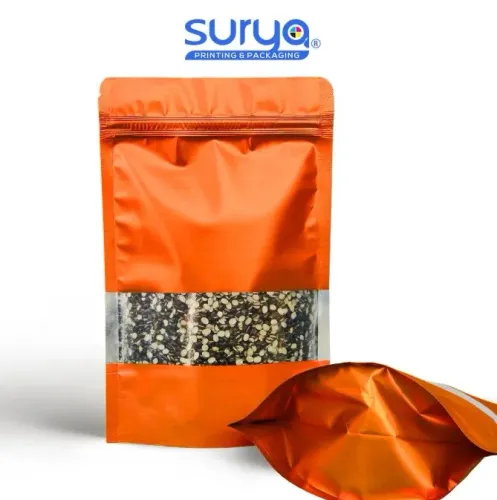
Orange Color Matte Finish transparent window Ziplock Inner Foil Stand-Up Pouch
Appearance Matte Green in color | 3 sides sealed | Bottom gusset | Tear notch | Zipper | Inner foil | With window Technical Details Pet + Poly | 110...
View product → Packaging Pouch
Black Color Matte Finish transparent window Ziplock Inner Foil Stand-Up Pouch
Appearance Matte Black in color | 3 sides sealed | Bottom gusset | Tear notch | Zipper | Inner foil | With window Technical Details Pet + Poly | 110...
Keywords