Hygiene products fail in packaging when the pack is chosen by appearance instead of product form, fill weight, barrier need and transport conditions. By the end, you will be able to define pouch and carton specifications, compare their practical trade-offs and ask a packaging supplier for evidence rather than a price alone.
Key takeaways
- State product form, fill temperature, shelf life and transport conditions.
- Measure the filled pouch before approving artwork or seal positions.
- Use opaque films when privacy and light protection matter.
- Compare suppliers with samples, test reports and delivered specifications.
Match the pack to the hygiene product and its risks
A pouch or mono carton can hold sanitary pads, pantyliners, adult incontinence products, wet wipes, diapers, menstrual cups, cotton products and hygiene powders, but each needs a different defence. The phrase hygiene product packaging in Coimbatore is not a sufficient specification: state the product form, fill temperature, shelf life, transport conditions and opening feature.
ProductMain riskPack responseSanitary pads and pantylinersMoisture, dust, odour and crushed edgesUse a moisture barrier, clean seals and compression-resistant outer protectionAdult incontinence products and diapersHigh bulk, compression, humidity and torn packsUse strong seals, suitable gussets and a carton or film structure that survives stackingWet wipesLiquid leakage, evaporation and contaminationUse a chemically compatible sealant, leak-resistant seals and a resealable openingMenstrual cupsDust, deformation, tampering and privacy concernsUse a protective pouch or fitted carton with a controlled, visible openingCotton productsFibres, dust, moisture and handling contaminationUse a clean, sealed pack with enough headspace to prevent crushingHygiene powdersDust escape, clumping and moisture uptakeUse dust-resistant seals and a moisture barrier
Liquids and creams also require chemical compatibility and drop-tested leak resistance. Sterile or contamination-sensitive products need validated barrier performance, seal integrity and opening controls; attractive printing proves none of these. For any product that contacts food, specify the Food Safety and Standards (Packaging) Regulations and applicable Indian Standards or equivalent migration tests.
Calculate pouch dimensions before approving artwork
Start with the filled product, not the artwork: measure the product after folding or stacking, then add clearance for movement and sealing. For sanitary pads, diapers and wipes, record pack width, height and compressed thickness at the intended count.
A pouch that fits one sample can burst when a full stack shifts during filling or transport.
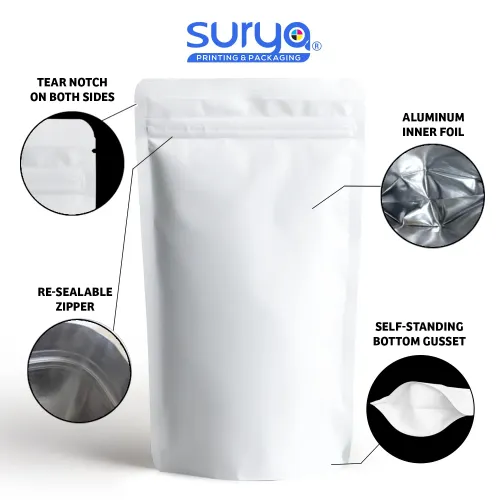
DimensionCalculationApproval checkFinished width and heightProduct footprint plus side and top clearanceConfirm the loaded pouch does not stretch the laminate or distort the graphicsGusset depthCompressed stack thickness plus loading clearanceTest the filled base and confirm it stands or stacks as intendedHeadspaceSpace above the product before closingLeave room for insertion without trapping product in the sealSeal areaReserve the machine’s required seal width on every edgeKeep product, print, barcode and tear notch outside this zone
Headspace is not wasted capacity: too little traps a pad, wipe or powder in the seal; too much lets the contents slide and crease the pack. Set gusset depth from the loaded product, not its loose measurement.
For custom printed pouches in coimbatore, approve a dimensioned dieline showing seal-free areas, tear-notch position, zipper or spout clearances, print side and barcode location. Ask for seal trials with the actual sealant layer and product contamination.
ASTM F2029 can establish sealing temperature, pressure and dwell settings; ASTM F88/F88M measures seal strength, so request a separate leak or integrity test before releasing artwork.
Choose transparency without sacrificing protection or privacy
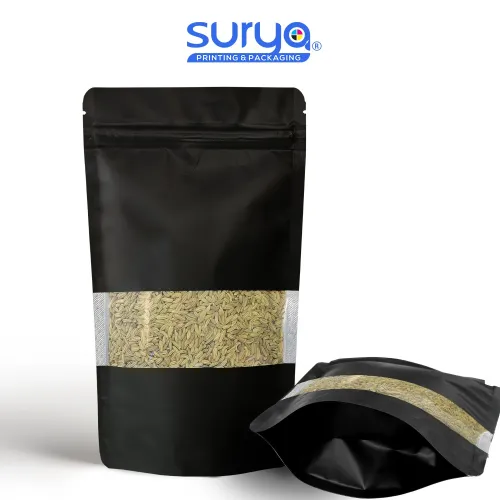
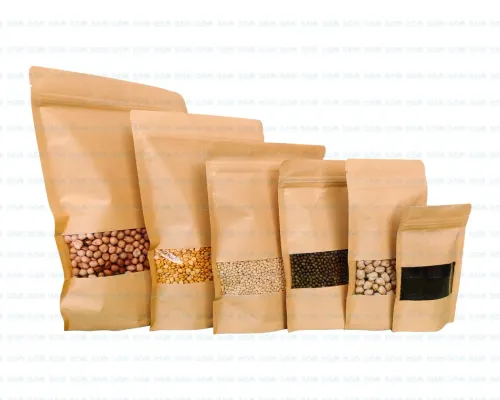
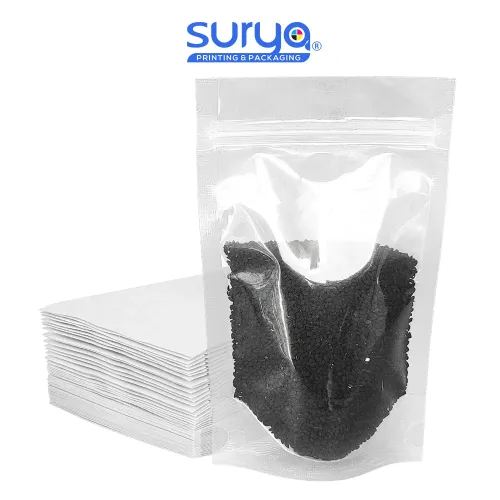
Use a fully transparent pouch when shoppers need to inspect the hygiene product and privacy is not a concern. Choose a window when you want product visibility without exposing the whole pack. Choose an opaque barrier structure when light, moisture, contamination control or discreet presentation matters more than seeing the contents.
OptionWhat it providesWhen it appliesFully transparent pouchMaximum product visibility, with no aluminium-foil or metallized layerCotton products, selected wipes or retail packs where appearance and inspection drive purchasePrinted pouch with windowControlled visibility while leaving most of the pack available for graphics and instructionsProducts needing a quick visual check, but not full exposure of the contentsOpaque barrier pouchPrivacy and stronger control of light and moisture transmissionAdult incontinence products, menstrual products, hygiene powders or contamination-sensitive contents
A buyer sourcing transparent packaging pouches in Coimbatore should specify the barrier from the product’s shelf-life requirement, not from the film’s appearance. EVOH and coated films can preserve transparency, but humidity can reduce their oxygen-barrier performance; request oxygen-transmission and water-vapour-transmission data at stated test conditions.
If you add a plastic window to a mono carton, define its material, adhesive and recycling requirement. Aluminium foil and metallized film provide barriers but block transparency, while a large plastic window can complicate fibre recovery.
Approve the actual pouch and carton together, because a visible product is not useful if the seal leaks or the pack exposes sensitive contents.
Specify the mono carton for fit, strength and recycling claims
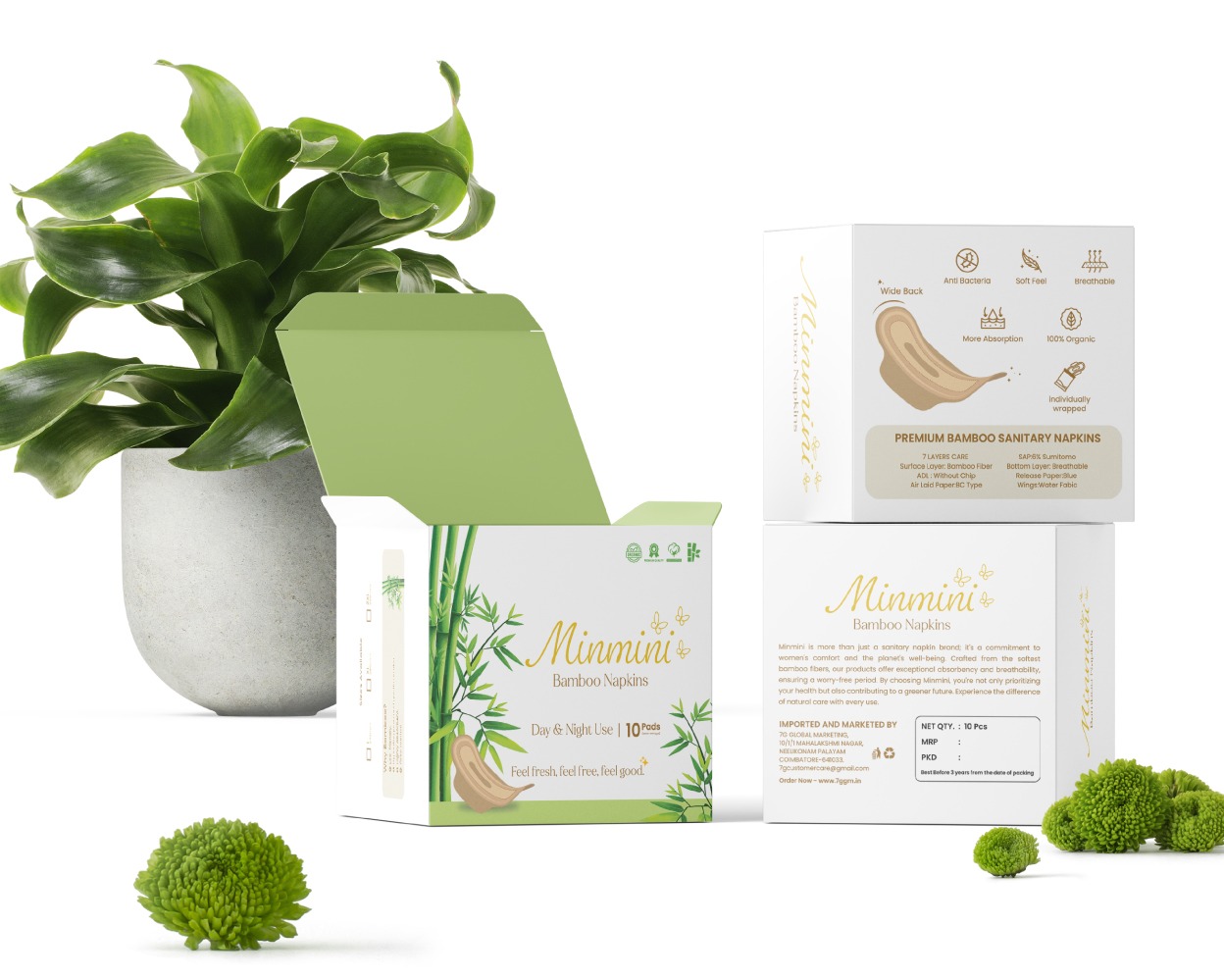
A carton that fits the pouch can still split at the crease, collapse in transit or undermine a recycling claim. Tell a mono carton box manufacturer in Coimbatore whether the carton is a primary pack, an outer carton around a sealed pouch or a retail display carton.
1. Specify the board by grade, grammage, caliper, coating and intended folding process. Do not approve “300 GSM” alone: two boards with the same grammage can differ in thickness, stiffness, crease behaviour and fold-crack resistance.
2. Supply the finished pouch dimensions, product count, insertion direction and required clearance. Approve the die-line with panel dimensions, glue flaps, tuck geometry, crease positions, locking features and dimensional tolerances.
3. Define performance targets before sampling. Include compression or stacking load, drop and vibration conditions, maximum pallet height, carton weight, cartoner speed, acceptable panel bowing and the number of opening-and-closing cycles.
4. State the complete structure: paperboard coating, ink, varnish, adhesive and any window film. If “mono carton” supports a recycling claim, specify whether plastic-free means no plastic coating or no non-fibre component, then request repulpability or fibre-yield evidence under an agreed test method.
5. Approve print and inspection details alongside the carton specification. Record colour tolerance, barcode grade, print-side registration, crease cracking limits, carton count per case and palletisation pattern.
A paperboard carton is not automatically recyclable. Plastic lamination, metallised effects, large windows and incompatible adhesives can change the result, so put every exception in the purchase specification.
Compare suppliers using tests, samples and a complete delivered specification
A fair comparison uses the complete delivered specification and pass/fail evidence, not the lowest unit price from a custom printed pouches and mono carton box manufacturer in coimbatore. A cheap quote can exclude trim waste, artwork changes, changeover charges, minimum order quantity, rejected-print allowance, freight or palletisation.
Ask every shortlisted supplier for the same approval pack:
- A pouch sample stating substrate structure, thickness, dimensions, seal configuration, zipper or notch clearances, print side, colour standard, barcode grade and seal-free areas.
- Seal results using ASTM F88/F88M, with conditioning, seal width, peel speed and acceptance limit recorded. Request a separate leak or integrity test; peel strength alone does not prove a leak-free pack.
- A carton sample and die-line showing grammage, caliper, stiffness, coating, crease performance and the intended cartoning process. GSM alone cannot predict folding or compression performance.
- A delivered-cost sheet covering packing quantity, pallet pattern, freight, inspection method, lead time and replacement treatment for rejects.
- Material declarations and confirmation of who supplies packaging-category information, EPR documentation and reporting support under India’s Plastic Waste Management Rules.
CompareWhat to verifyFailure hidden by priceSupplier quoteSame specifications and quantitiesDifferent material or excluded chargesProduction sampleDimensions, seals, colour and barcodeApproval sample differs from productionDelivered specificationTests, packing and inspection recordsDamage, leakage or unusable cartons
Ask Surya Graphics to document these points in the quotation rather than leaving them as verbal promises. A genuinely plastic-free mono carton also needs confirmation that coatings, varnish, adhesive and window film do not undermine that claim.
Related products
 Packaging Pouch
White Color Matte Finish Ziplock Inner Foil Stand-Up Pouch
Appearance Matte White in color | 3 sides sealed | Bottom gusset | Tear notch | Zipper | Inner foil | Without window Technical Details Pet + Poly |...
View product →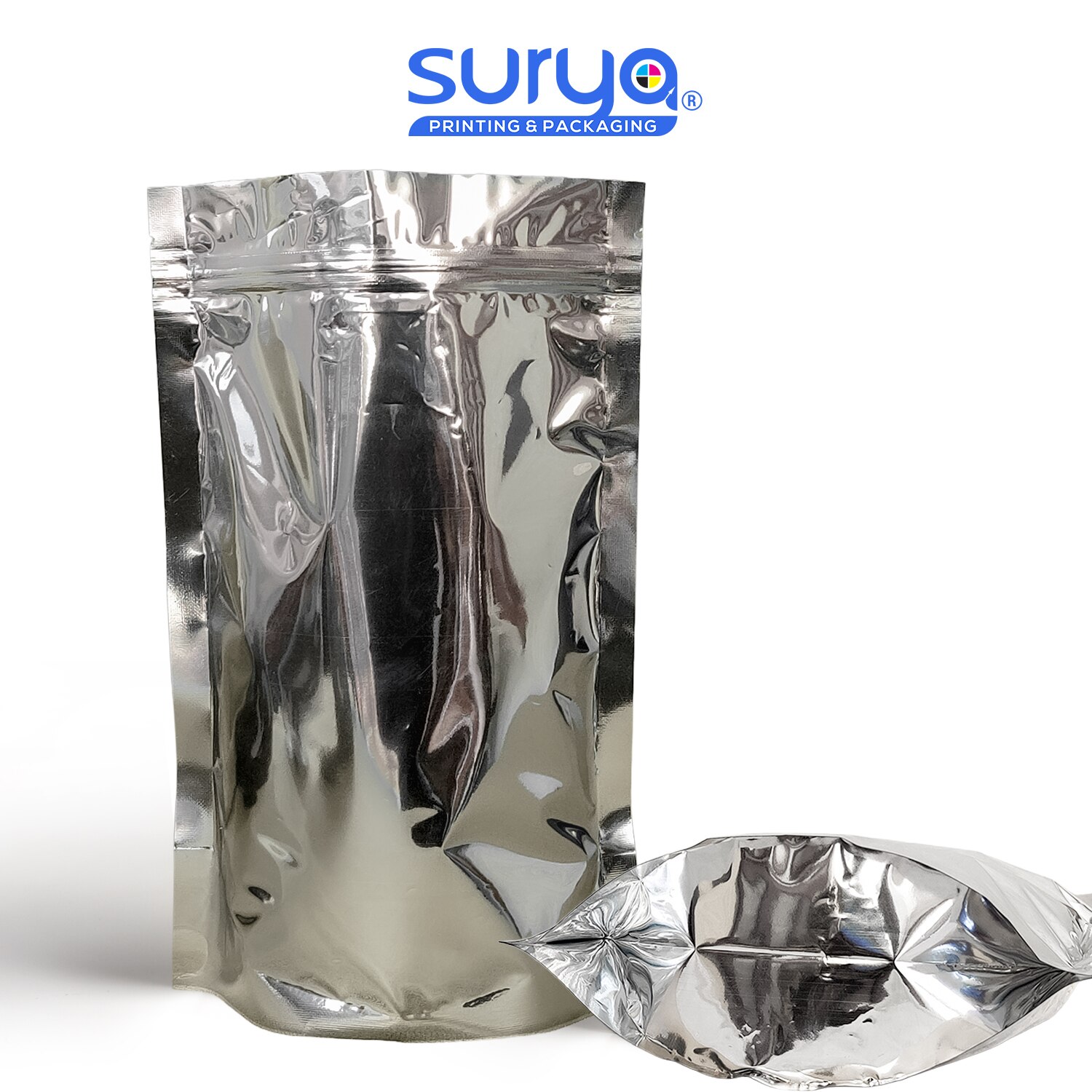 Packaging Pouch
Both side silver Ziplock Stand-Up Pouch
Appearance Silver in color | 3 sides sealed | Bottom gusset | Tear notch | Zipper | Without window Technical Details Pet + Poly | 110 Microns | Heat...
Frequently asked questions
- What information should you give a hygiene packaging manufacturer?
- Give the product form, fill temperature, shelf life, transport conditions and required opening feature before requesting a quotation.
- How do you calculate the correct pouch dimensions?
- Measure the filled product, then allow for seal widths, gussets, closure components, headspace and artwork-safe areas before approving the dieline.
- When should hygiene products use opaque rather than transparent pouches?
- Choose opaque film when the product needs privacy or protection from light; use a clear window only where visibility does not compromise those needs.
- How should you compare mono carton and pouch suppliers?
- Request production samples, check dimensions and seal performance, review material and print specifications, and compare the complete delivered specification.
Related products
 Packaging Pouch
Kraft Ziplock Inner Foil Stand-Up Pouch
Appearance Brown in colour | 3 sides sealed | Bottom gusset | Tear notch | Zipper | Inner foil | Without window Technical Details Kraft + Poly | 110...
View product → Packaging Pouch
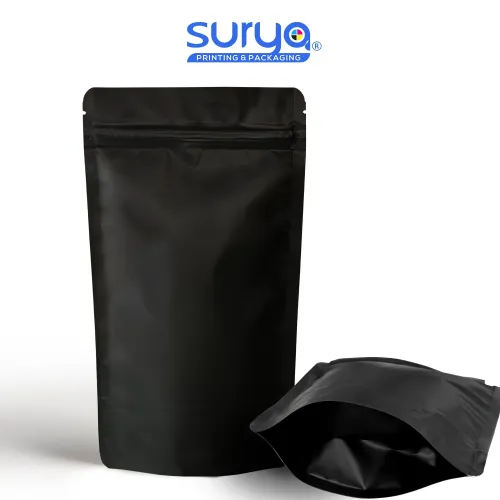
Black Color Matte Finish Ziplock Inner Foil Stand-Up Pouch
Appearance Matte Black in color | 3 sides sealed | Bottom gusset | Tear notch | Zipper | Inner foil | Without window Technical Details Pet + Poly |...
View product → Packaging Pouch
White Color Matte Finish transparent window Ziplock Inner Foil Stand-Up Pouch
Appearance Matte White in color | 3 sides sealed | Bottom gusset | Tear notch | Zipper | Inner foil | With window Technical Details Pet + Poly | 110...
View product →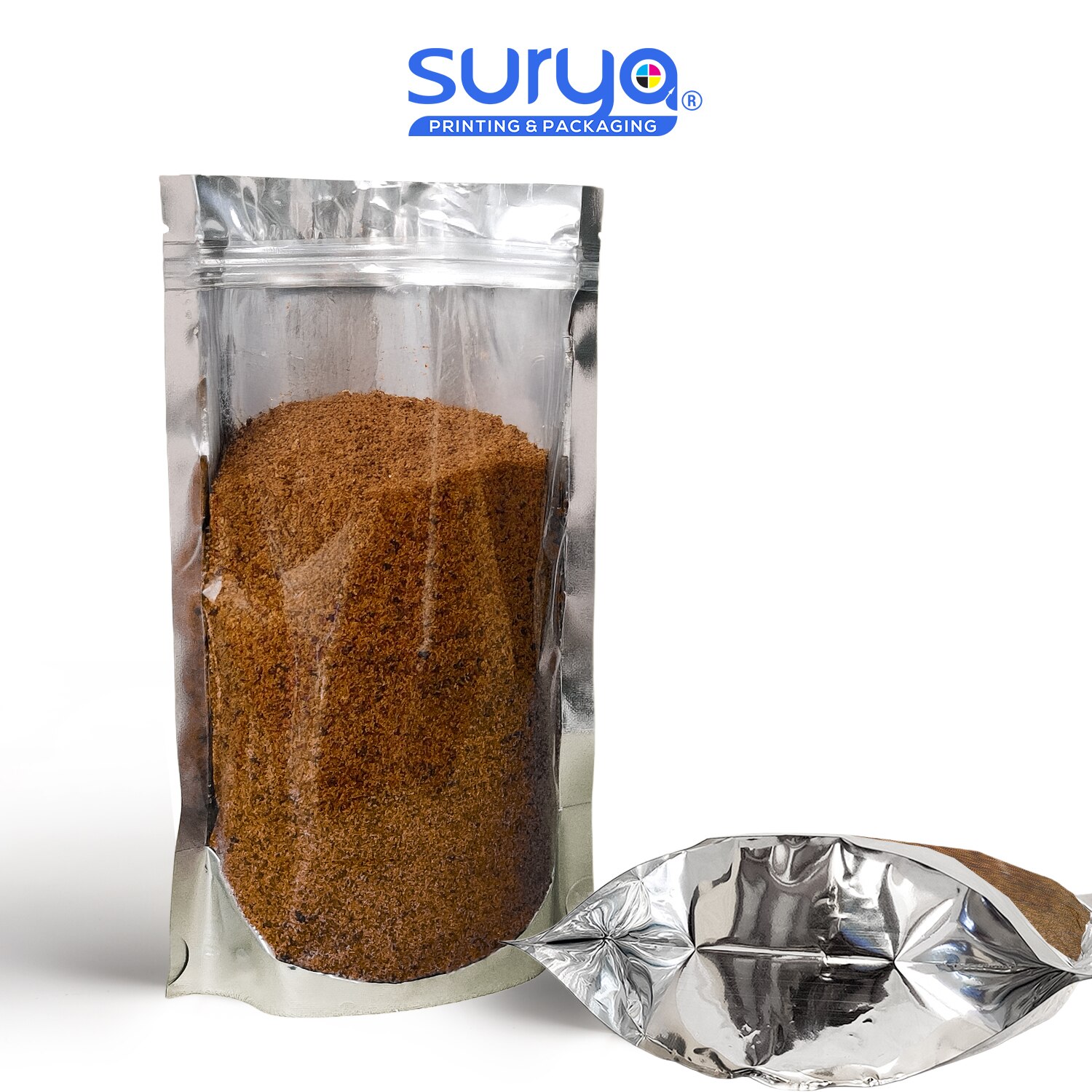 Packaging Pouch
One side Transparent silver Ziplock Stand-Up Pouch
Appearance Silver in color | 3 sides sealed | Bottom gusset | Tear notch | Zipper | One side transparent Technical Details Pet + Poly | 110 Microns |...
Keywords