Choosing a pouch by colour and price alone can leave you with weak seals, poor shelf-life protection, unreadable barcodes or artwork that changes during production. By the end, you will know how to match the pouch format and film structure to your product, prepare print-ready files, compare digital printing with plate-based alternatives and evaluate supplier quotations.
Key takeaways
- Use white ink to control colour opacity on clear or metallised film.
- Match pouch structure and barrier properties to the product inside.
- Choose digital printing for short runs, variants and faster artwork changes.
- Approve a physical proof, dimensions, seals and batch details before production.
What white digital printing changes on a pouch
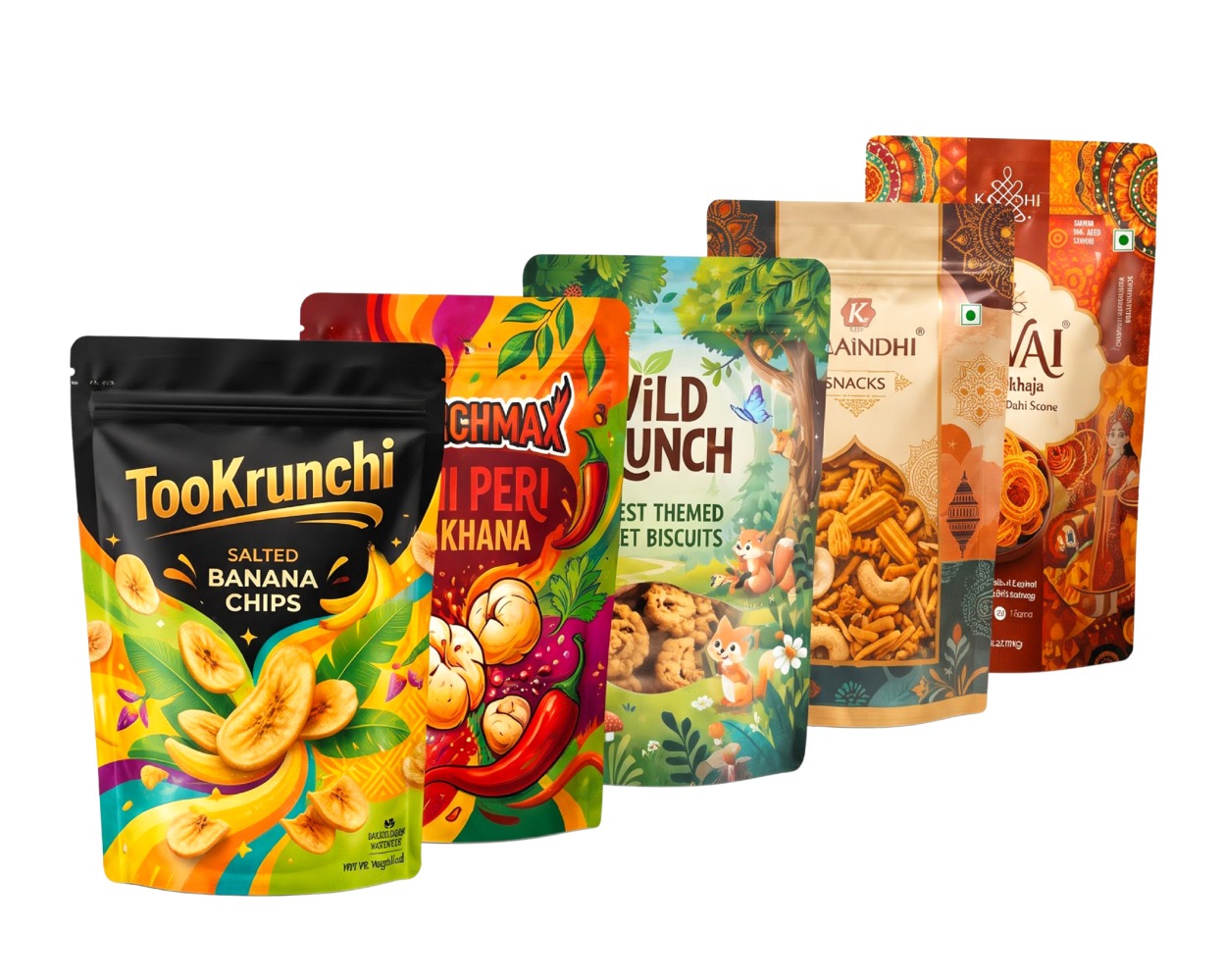
On clear or metallised film, white ink creates the opaque base that controls how CMYK colours appear. It is not the same as printing on white paper or using white film: without controlled white coverage, colours can look transparent, metallic, muted or uneven.
Reverse printing places the image behind CMYK, then white ink behind the image before lamination protects it. Surface printing leaves the image exposed and may need an overprint varnish or protective laminate.
Confirm the print direction and identify which side contacts food; “food-grade film” alone does not prove that the complete printed laminate, ink, coating and adhesive are suitable for the intended food.
Ask for white-ink coverage, curing conditions and rub-resistance results. Insufficient coverage weakens opacity and fine text; incomplete curing can cause scuffing, blocking or colour transfer. Approve a physical press proof on the intended film or laminate, not a paper proof or screen preview.
Custom digital pouch printing is most useful for:
- Regional launches and seasonal batches
- Multiple flavours or private-label trials
- Variable batch numbers, QR codes or other codes
Digital removes plate-making, but not film, laminate, ink, pouch conversion, changeover waste or finishing costs. Compare the complete quotation, then retain the approved sample and colour target because version-to-version colour can shift.
Which pouch appearance fits powders, snacks, coffee and other products?
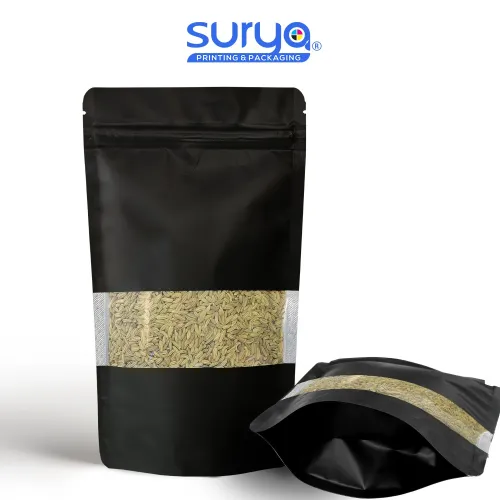
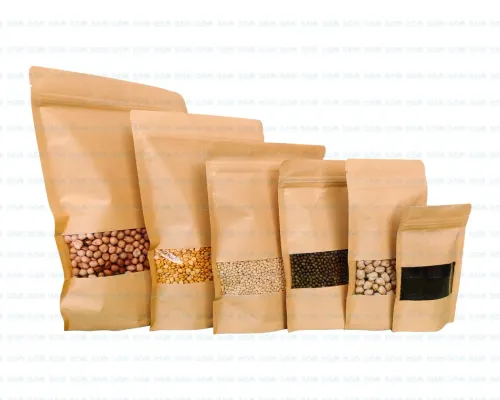
Choose a white matte pouch without a window for powders that need opacity, tidy branding and a uniform retail appearance. Choose a window only when seeing the product helps sell it and the contents remain attractive after filling, transport and settling.
OptionBest fitMain cautionWhite matte without a windowPowders, spice blends and products needing clean, consistent brandingMatte describes low gloss, not oxygen, moisture, aroma, light or grease protectionWhite matte with a windowSnacks, dry fruits and visibly appealing piecesA window can weaken visual consistency and reveal crumbs, breakage, oil marks or uneven settlingTransparent pouchSnacks or dry goods where product visibility is the main selling pointLight exposure and weaker visual control can harm sensitive productsSilver foil pouchCoffee, aroma-sensitive products, spices and products needing strong light protectionConfirm the laminate’s oxygen, moisture, aroma and seal performance; silver appearance alone proves nothing
Coffee needs aroma protection, so a matte finish cannot replace a specified barrier laminate. Spices need attention to light and aroma, while pickles add oil, acidity and seal-contamination risks; keep the heat-seal area free of product.
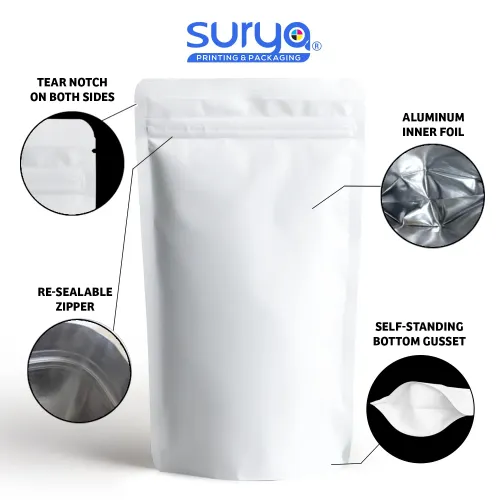
White ziplock food pouches offer convenient resealing, but the zipper is not automatically airtight or leakproof. Heat seals, the film structure and, where required, a seal above the zipper provide primary protection.
For small business packaging pouches, specify the product, fill conditions and barrier requirement—not just “white matte.” “White matte digital pouches in Coimbatore” describes appearance, not shelf-life performance.
How to confirm the pouch fits the product and protects it
Confirm fit with a filled sample, not an empty pouch. Record these specifications before ordering small business packaging pouches:
1. Measure filled weight and product volume, then record pouch width, height and bottom-gusset expansion. Include the product’s settled and shaken heights; a pouch matching nominal dimensions can fail when powder or snacks occupy the gusset and push contents into the zipper.
2. Specify required headspace, zipper position, tear-notch clearance and the width of every heat-seal area. Keep powder, oil and crumbs out of the top seal; a white ziplock food pouch is resealable, but its zipper is not automatically airtight or leakproof.
3. Ask for the complete PET-plus-poly laminate structure, named film grades and total thickness, not “white matte” alone. Request oxygen transmission rate, water-vapour transmission rate, seal strength, and puncture and grease-resistance results for the finished structure under stated test conditions.
4. State whether the product will be hot-filled, frozen, retort-processed, high-fat or abrasive. Ask the converter to confirm suitable seal temperatures, flex-crack resistance, low-temperature performance, retort compatibility, oil resistance and abrasion protection for that use.
5. Request food-contact documentation for the complete printed laminate: substrate, inks, coatings, adhesive and intended food and conditions of use. “Food-grade film” alone does not prove suitability, because migration can depend on the printing arrangement and processing conditions.
When digital printing beats rotogravure or flexographic printing
Digital printing wins when you need short runs, several artwork versions or frequent changes. It avoids printing plates and cylinders, but you still pay for film, laminate, ink, pouch conversion, changeovers and finishing. Flexographic or rotogravure production becomes cheaper when one design runs at larger repeat volumes.
OptionDigital printingFlexographic or rotogravureMinimum orderBetter for small quantities by artworkBetter when quantities justify a longer runSetup and toolingNo plate or cylinder chargePlate and cylinder costs increase with each designLead timeFaster artwork changes and samplingLonger setup, but efficient after approvalColour consistencyApprove a physical colour target; versions can varyStrong repeat consistency after the press is establishedRepeat ordersEconomical for changing demand or multiple flavoursLower unit cost for stable, high-volume repeatsWaste and dataLess setup waste; supports variable codesMore setup waste; variable data needs extra planning
Custom digital pouch printing fits regional launches, seasonal batches, private-label trials and products with changing codes. Choose flexo or rotogravure when the same artwork will be reordered at a predictable volume.
The search phrase white digital pouch printing mono carton box manufacturer in coimbatore combines two different capabilities. A pouch converter manages film selection, lamination, sealing, zippers and leak testing; a mono carton manufacturer manages paperboard, dielines, creasing, die-cutting and folding checks.
Surya Graphics belongs in your comparison only after you confirm the required format, laminate and tests.
Ask every supplier to quote:
- Pouch dimensions, film structure, thickness, print sides and colours
- Zipper, notch, window, matte finish, packing, freight and taxes
- Sampling, quantity by artwork, variable data and reprint terms
Related products
 Packaging Pouch
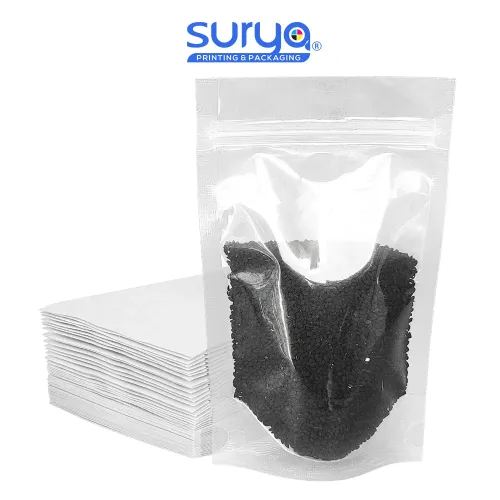
Both side transparent Ziplock Stand-Up Pouches
Appearance Transparent in color | 3 sides sealed | Bottom gusset | Tear notch | Zipper | Full Transparent Technical Details Pet + Poly | 110 Microns...
View product → Packaging Pouch
White Color Matte Finish Ziplock Inner Foil Stand-Up Pouch
Appearance Matte White in color | 3 sides sealed | Bottom gusset | Tear notch | Zipper | Inner foil | Without window Technical Details Pet + Poly |...
What to send the printer and approve before production
Send a production-ready file, not a screenshot. For white digital pouch printing in Coimbatore, use this approval sequence:
1. Give the printer the finished artwork size and dieline, with bleed, safe margins, colour mode, image resolution, and barcode quiet zone marked. State whether the pouch uses reverse or surface printing, identify the white-ink layer, outline fonts or embed them, and confirm accepted PDF, AI or other file formats.
2. Ask the printer to confirm the food-contact side and print direction. Reverse printing places CMYK and white behind the film; surface printing leaves the image exposed, so the choice affects scuffing, colour density and rub resistance.
3. Approve a physical press proof or retained finished sample on the intended laminate, not a screen preview. Check white opacity, colour shift on matte film, small text, barcode scanning, zipper and tear-notch clearance, front-to-back registration, seal-zone cleanliness and food-contact-side position.
4. After conditioning for Coimbatore’s heat and humidity, request rub, adhesion, blocking and heat-seal checks. Record the conditioning and storage conditions; heat and moisture can expose curl, scuffing, blocking or seal problems that a fresh sample hides.
Compare quotations only after recording the sample policy, approved colour target, storage conditions and reprint responsibility. This discipline matters for custom digital pouch printing used in seasonal batches, multiple flavours, private-label trials and variable codes, where an attractive file can still produce an unusable pack.
Frequently asked questions
- What does white ink change on a digital pouch?
- White ink creates an opaque base on clear or metallised film, controlling whether CMYK colours look solid, transparent, metallic or muted.
- Which pouch appearance suits different products?
- Use a finish and structure that match the product: matte or glossy surfaces for presentation, barrier films for coffee and snacks, and suitable seals or zippers for powders.
- How do you confirm a pouch fits and protects the product?
- Check filled dimensions, headspace, seal width, zipper position, film structure, oxygen and moisture barriers, and compatibility with the product.
- When does digital printing beat rotogravure or flexographic printing?
- Digital printing suits short runs, multiple designs, prototypes and frequent changes because it avoids printing plates and supports version-by-version production.
- What should you send the printer before production?
- Send final artwork, pouch dimensions, material and finish preferences, product details, pack quantity, required features and any regulatory or barcode information.
Related products
 Packaging Pouch
White Color Matte Finish transparent window Ziplock Inner Foil Stand-Up Pouch
Appearance Matte White in color | 3 sides sealed | Bottom gusset | Tear notch | Zipper | Inner foil | With window Technical Details Pet + Poly | 110...
View product →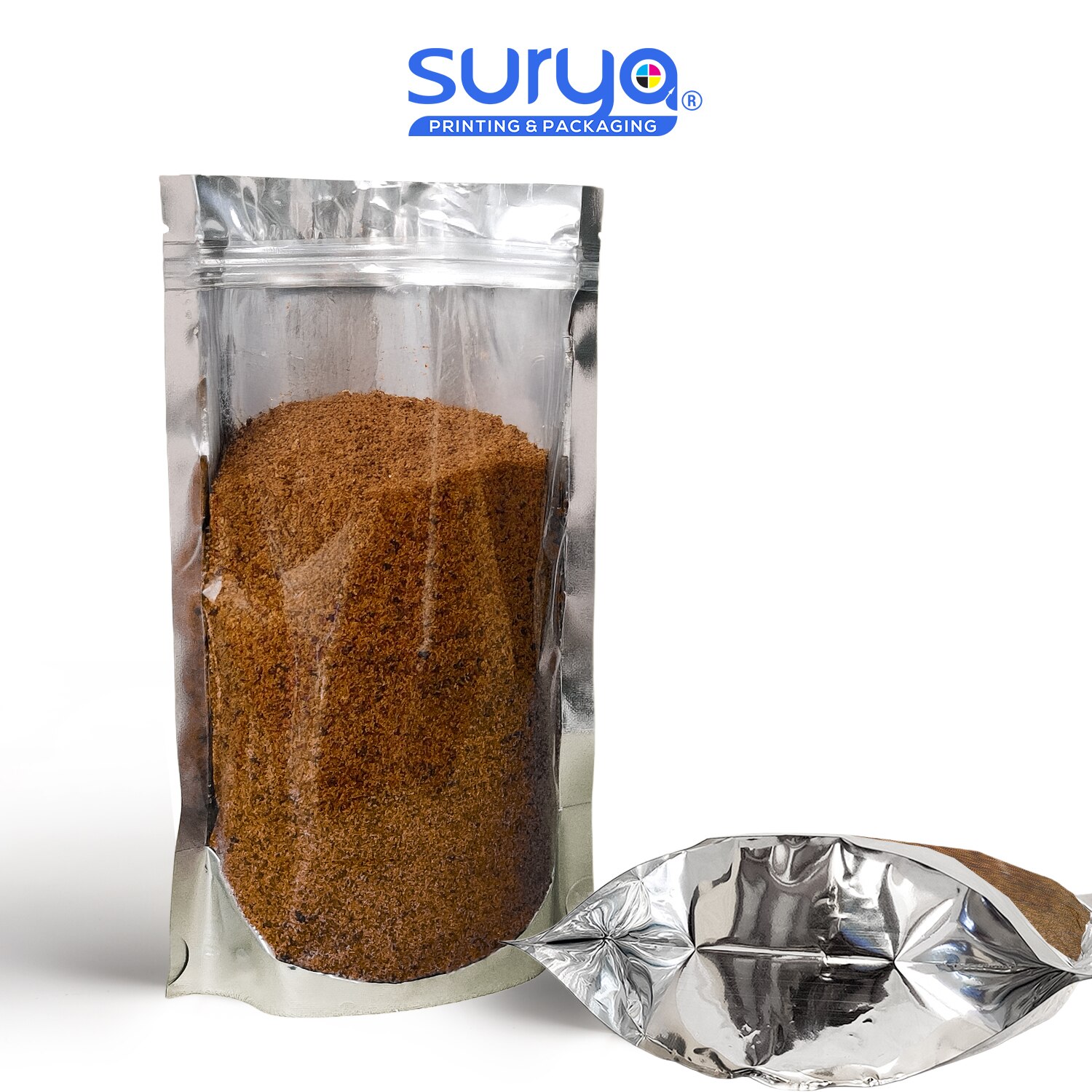 Packaging Pouch
One side Transparent silver Ziplock Stand-Up Pouch
Appearance Silver in color | 3 sides sealed | Bottom gusset | Tear notch | Zipper | One side transparent Technical Details Pet + Poly | 110 Microns |...
View product →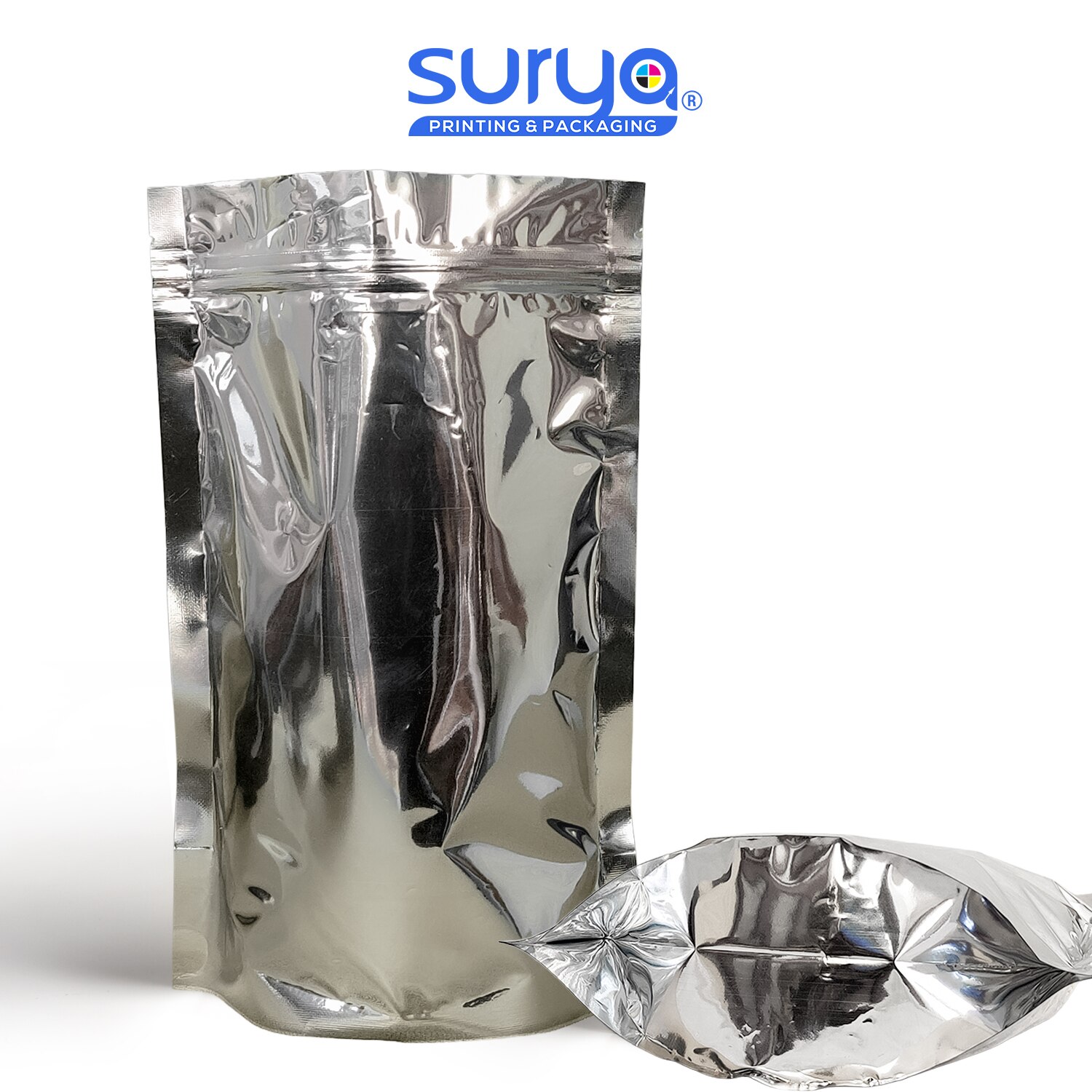 Packaging Pouch
Both side silver Ziplock Stand-Up Pouch
Appearance Silver in color | 3 sides sealed | Bottom gusset | Tear notch | Zipper | Without window Technical Details Pet + Poly | 110 Microns | Heat...
View product → Packaging Pouch
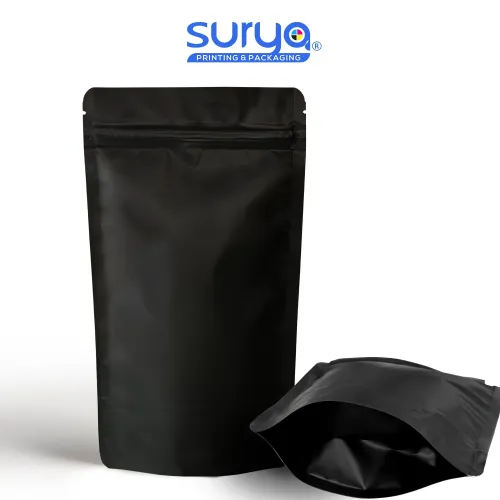
Black Color Matte Finish transparent window Ziplock Inner Foil Stand-Up Pouch
Appearance Matte Black in color | 3 sides sealed | Bottom gusset | Tear notch | Zipper | Inner foil | With window Technical Details Pet + Poly | 110...
Keywords